The Gambia has set a target of achieving universal electricity access and generating 30 per cent of its energy from renewable sources by 2030, as the country steps up efforts to expand access to affordable and clean energy.
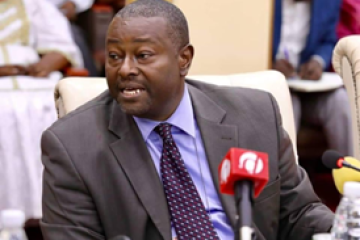
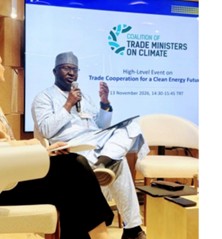
Professor Muhammadou M.O. Kah, The Gambia’s Ambassador to Switzerland and Permanent Representative to the United Nations Office at Geneva (UNOG), the World Trade Organization (WTO) and other international organisations in Switzerland, said the country was pursuing an energy transition that places regional electricity trade and renewable energy at the centre of its development strategy.
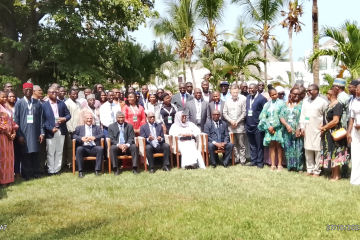
He disclosed this while speaking at the Coalition of Trade Ministers on Climate under the theme, “Trade Cooperation for a Clean Energy Future,” during the COP31 Trade Day held on November 13, 2026, at the European Union Pavilion in the Blue Zone in Türkiye.
Ambassador Kah said although approximately three in four Gambians have access to electricity, the figure remains below half in rural communities, highlighting the need to accelerate investments in energy infrastructure and expand electricity access across the country.
“Our target: universal access and 30 per cent renewable by 2030,” he stated.
He explained that electricity imports have played a significant role in meeting the country’s energy needs, with more than half of its electricity supply coming through regional trade via the Organisation for the Development of the Gambia River Basin (OMVG) regional electricity interconnection.
According to him, electricity obtained through the regional interconnection has been cheaper than power generated from the country’s own thermal power plants, demonstrating the importance of regional cooperation in addressing energy challenges.
The Ambassador noted that while Africa is home to approximately one-fifth of the world’s population, it receives only about three per cent of global energy investment. He further highlighted that an estimated 590 million Africans still lack access to electricity.
He said regional electricity trade remains one of the most practical tools available to smaller African countries seeking to reduce carbon emissions while expanding energy access.
Ambassador Kah also highlighted the development of the 50-megawatt Soma solar park, which includes energy storage facilities, noting that its second phase has been designed with the potential to export electricity.
He said the project demonstrates that smaller countries such as The Gambia can become clean energy exporters rather than merely consumers.
However, he raised concerns about Africa’s dependence on imported renewable energy equipment, revealing that only about six per cent of solar panels installed across the continent are manufactured locally.
“We are importing equipment, not capability,” he said, calling for stronger investment in local manufacturing, skills development and technology transfer.
He further observed that Africa’s energy transition was increasingly being driven by imports, revealing that the continent imported 23 gigawatts of solar panels in the 12 months to June, representing a 53 per cent increase.
Ambassador Kah argued that trade policies must support the transition to clean energy, warning that tariffs, value-added tax and customs delays on solar panels, batteries and inverters could increase costs and restrict access.
He called for the removal of trade barriers on clean energy goods, mutual recognition of standards, stronger regional electricity markets under the African Continental Free Trade Area (AfCFTA), and technology transfer through Article 66.2 of the Agreement on Trade-Related Aspects of Intellectual Property Rights (TRIPS).
He urged the Coalition to prioritise clean energy goods and services for Least Developed Countries (LDCs) as the first deliverable under its Menu of Voluntary Actions.
He also disclosed that The Gambia had already committed to eliminating duties on clean cooking components as part of efforts to promote access to affordable and sustainable energy.