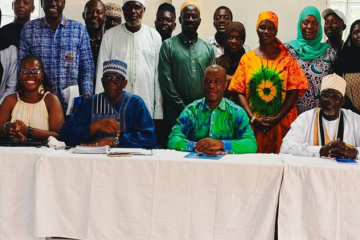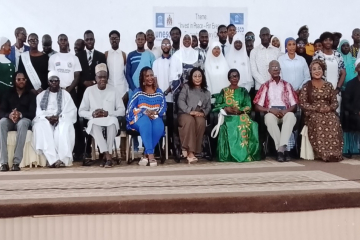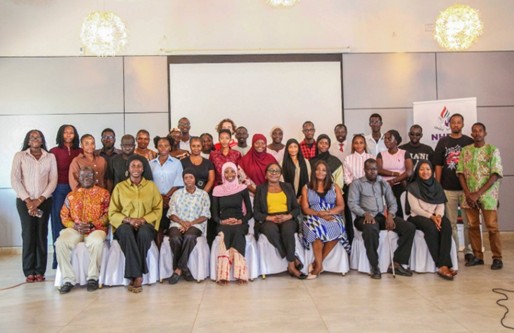
The National Human Rights Commission (NHRC) has concluded a two-day capacity-building programme for 32 electoral actors ahead of the December presidential election.
The initiative, funded by the Swiss Embassy in Dakar, Senegal, was designed to enhance participants’ knowledge of election monitoring and strengthen their understanding of the human rights standards that should guide all stages of the electoral process.
Held as part of a post-assessment training programme on election monitoring, the initiative sought to equip key electoral stakeholders with a stronger understanding of human rights-based approaches to elections, democratic governance, the rule of law and effective election monitoring.
The training, which ended on Wednesday, 11 November 2026, was held at the Sunset Beach Hotel and brought together journalists and members of civil society organisations. It was organised by the National Human Rights Commission as part of efforts to promote transparent, credible and peaceful elections in The Gambia.
Sessions focused on human rights, democracy and the rule of law, with particular emphasis on integrating human rights principles into electoral processes. The programme also aimed to enhance collaboration among stakeholders and promote inclusive and peaceful elections.
The initiative provided participants with an opportunity to exchange experiences, build partnerships and strengthen collective efforts towards ensuring credible electoral processes. Participants underwent various training sessions on electoral processes and human rights, including the basic principles of human rights monitoring, electoral observation versus human rights monitoring in elections, international and regional legal frameworks, and the different phases of the electoral cycle.
Other sessions covered an overview of the electoral hotspot mapping report, election dispute mechanisms, and the monitoring of electoral violence and other human rights violations. Discussions also examined the causes and manifestations of electoral disputes, as well as strategies for monitoring and reporting election-related violence.
Participants were further engaged on issues relating to non-discrimination, freedom of expression, peaceful assembly and freedom of association. Additional discussions highlighted the role of the media in election monitoring, key principles of responsible journalism during elections, media responsibilities and the obligations of political actors in safeguarding democratic processes.
Speaking at the opening ceremony, Mrs Jainaba Johm, Vice Chairperson of the National Human Rights Commission, emphasised the pivotal role that civil society organisations and the media play in promoting credible, transparent, peaceful and inclusive elections throughout the electoral cycle.
Through election observation and monitoring, citizen engagement and responsible reporting, she said, electoral actors contribute significantly to safeguarding democratic principles and strengthening public confidence in the electoral process.
Mrs Johm assured participants that the National Human Rights Commission remains committed to working with civil society organisations, the media and other stakeholders to ensure that the rights of all citizens are respected and protected throughout the electoral cycle.
She explained that the training was designed to equip participants with the necessary skills to monitor and report accurately and responsibly on human rights violations during the election period, in line with the Elections Act, the Constitution and international best practices.
The NHRC vice chairperson concluded by expressing appreciation to the Swiss Embassy in Dakar for funding the training programme, describing the support as vital in strengthening efforts to promote human rights, democratic governance and peaceful elections in The Gambia.
In response, the Health Minister acknowledged the charity's contribution and outlined progress made within the health sector since 2019, while also recognising existing challenges that require further support from development partners and humanitarian organisations.
Dr Samateh encouraged Livity of Zion to identify its priority areas of intervention and work closely with health authorities to maximise the impact of future support programmes. He further commended the team for their commitment to improving the lives of Gambians and reaffirmed the Ministry's willingness to collaborate with partners working to strengthen the country's healthcare system.
The meeting concluded with Nubian Zuhrah expressing optimism about bringing additional health projects and support to The Gambia. She announced plans to return in December 2026 with more healthcare professionals to continue the organisation's humanitarian mission.