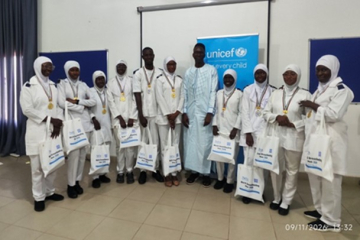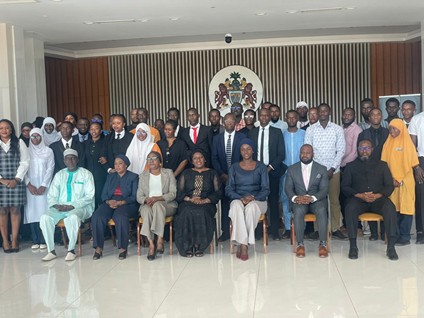
This year’s finals, held at the Sir Dawda Kairaba Jawara (SDKJ) Conference Center, brought together the top performers from an initial pool of 23 registered universities. Four institutions advanced to the semi-finals: Africa Nazarene University (Kenya), Universities of Benin, Adekule Ajasin and Jos (all from Nigeria). All finalists hailed from outside The Gambia, further cementing the competition’s continental stature.
The 14 participating universities that submitted written memorials included: University of Calabar, University of The Gambia, University of Uyo, University of Nigeria Enugu Campus, Nasarawa State University, University of Jos, Adekule Ajasin University, Ebonyi State University, Nnamdi Azikiwe University, University of Rwanda, Obafemi Awolowo University, University of Benin, Africa Nazarene University, and Arthur Jarvis University.
The 2025 moot centered on the theme “Climate Change and Human Rights in Africa,” reflecting Strategic Objective 4 of the NHRC’s revised strategic plan and aligning with the global Human Rights Day theme, “Human Rights as Our Everyday Essential.”
Speaking at the ceremony, NHRC Vice Chairperson Jainaba Johm said climate change has shifted from an environmental issue to a “clear human rights concern,” citing findings by the Office of the High Commissioner for Human Rights (OHCHR) and the Intergovernmental Panel on Climate Change (IPCC) showing that Africa is warming faster than the global average, endangering women, children, and indigenous communities.
“Climate change affects the rights to life, health, food, water, development and housing,” she said. “Through this moot, participants help give life to these rights by arguing for justice and accountability.”
Johm described the competition as a training ground for Africa’s next generation of lawyers, judges, and policymakers, noting the record number of entries submitted this year.
Delivering remarks on behalf of the United Nations, Resident Coordinator Carl Fredrik Paul congratulated the NHRC and its partners for sustaining what he called an important platform for youth leadership. He pointed out that although The Gambia remains a zero-emission country, it continues to suffer disproportionately from climate impacts.
Paul urged organisers to consider transforming next year’s finals into a public event hosted at the university and broadcast nationally.
“Human rights is also access to information,” he said. “The brilliance of these young advocates should be shared with the wider public.”
Justice Isatou Jallow Sey of the High Court also addressed the gathering, describing climate change as a “growing human rights crisis” on the continent. She linked extreme weather patterns such as flooding, droughts, crop failures, and disease outbreaks to social and economic disruptions that disproportionately affect women, children, older persons, and people with disabilities.
She called on African states to adopt rights-based frameworks for climate mitigation and adaptation, strengthening litigation, improving international cooperation, and ensuring fair access to climate resources.
As the 2025 competition concludes, NHRC officials say the growing participation and depth of research showcased by the teams affirm the moot’s role in shaping future human rights defenders across the continent.