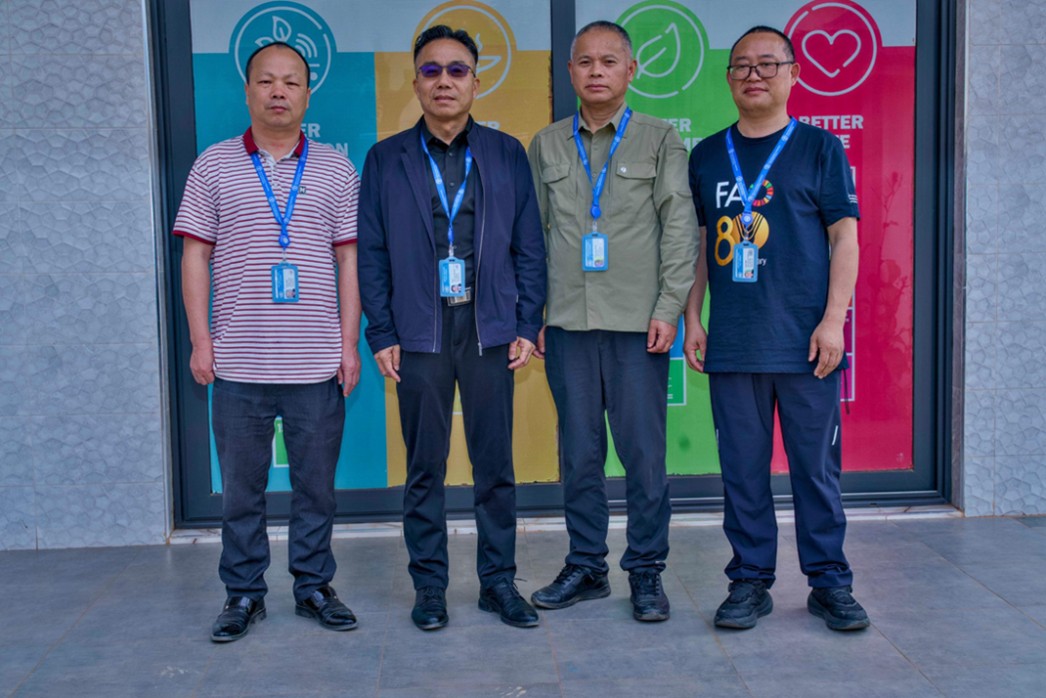
The experts arrived under the South-South Triangular Cooperation Programme, implemented by the Food and Agriculture Organization of the United Nations (FAO) with support from China.
Led by agricultural mechanisation specialist Li Zhi, the team includes experts in rice breeding, irrigation systems, and high-yield rice cultivation. They will be based in Sapu, Central River Region, for two years, providing technical assistance and training to farmers and agricultural technicians.
Their work will focus on improving rice productivity through modern cultivation techniques, irrigation management, and post-harvest processing, while also strengthening the value chain for both rice and millet.
Speaking on behalf of the team, Li Zhi expressed their commitment to supporting The Gambia’s agricultural development and long-term food security. “The goal is not just higher production for one season. We want to build systems and skills that will continue benefiting farmers long after this programme ends,” he said.
He explained that enabling farmers to harvest more rice from the same land would increase incomes, strengthen household stability, and help reduce poverty in rural communities. “With the right combination of irrigation techniques and modern machinery, farmers can waste less and grow more without spending extra funds. This collaboration is important in fighting hunger and poverty,” he added.
The Chinese experts will also train farmers in post-harvest handling and processing to reduce losses and improve productivity. Another specialist in plant protection is expected to join the team in the coming months to strengthen pest and disease management and improve post-harvest systems.
The programme is funded by the Chinese government with a budget of US$1.5 million for a two-year period.