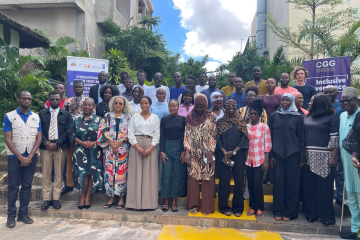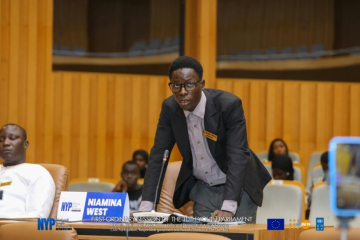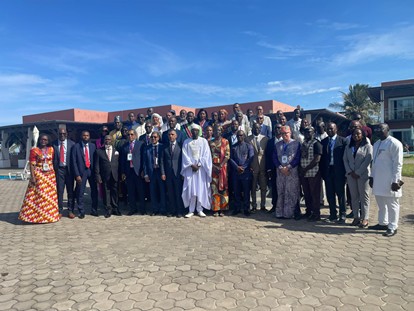
The forum seeks to revive the APPEL Alliance, strengthen inter-parliamentary cooperation, and build the capacity of lawmakers grappling with the rapid degradation of the West African Coastal and Marine Ecosystem.
Opening the session, Deputy Speaker of the National Assembly, Hon. Seedy S.K. Njie, warned that West Africa is facing a growing regional emergency.
“We meet today not for ceremony, but in response to a growing regional emergency,” he said, pointing to coastal erosion, rising sea levels, mangrove loss and marine pollution as direct threats already reshaping daily life across the sub-region.
In The Gambia, Hon. Njie noted, the Atlantic Ocean continues to devour beaches, damage infrastructure, and worsen saltwater intrusion—devastating farmlands, particularly rice fields worked by women farmers. Citing global climate agreements from Paris to Sharm El Sheikh, he emphasised that climate change is no longer a distant threat but a lived reality for coastal communities.
The Deputy Speaker highlighted several steps taken by the National Assembly, including enforcing the ban on plastic bags, tightening oversight on environmental institutions, and reviewing the National Environment Management Act to introduce stronger penalties against illegal sand mining. He also reaffirmed the Assembly’s commitment to domestication and monitoring of international environmental conventions such as the Paris Agreement, the Abidjan Convention, and the Sendai Framework.
However, he stressed that national efforts alone are insufficient.
“The ocean that unites our coastline does not recognise borders,” he said, calling for a unified legislative response across West Africa and positioning national assemblies as engines of regional environmental leadership.
Taking the floor next, Hon. Saikou Bah, Member for Basse and Chairperson of PRCM Gambia, linked the discussions to global momentum following the UN Ocean Conference in Nice. He noted that the swift progress of the BBNJ Treaty has transformed the high seas into a shared legal responsibility.
“For a nation cradled by the Atlantic, this is urgent and personal,” he told delegates.
He highlighted how the treaty’s implementation will directly impact The Gambia’s fish stocks, climate systems, and emerging blue economy. He urged lawmakers to lead ratification efforts and develop domestic legislation aligned with the treaty’s obligations.
Hon. Bah also commended the PRCM’s expansion under the WACA ResIP Programme and applauded the recent decision in Nouakchott to extend APPEL across the entire West African coastline, calling it a “game-changer” that recognises that environmental threats ignore borders.
He announced that The Gambia’s National APPEL Network will be formally established during the meeting with a permanent parliamentary structure tasked with reviewing environmental laws, strengthening government oversight, and amplifying community concerns.
“Today’s General Assembly is our founding moment,” he declared.
Addressing the gathering, PRCM Executive Director Ahmed Senhoury reminded delegates that the West African coastline while a major source of income, food security and cultural identity is under severe pressure from erosion, waste dumping, and over-exploitation of marine resources.
He warned that these pressures are undermining marine biodiversity and urged lawmakers to “rethink strategies” and collaborate across borders to safeguard one of the region’s most valuable ecosystems.
Madam Abide Assogba Batom, Director of Cabinet at the UEMOA Commission, echoed similar concerns, calling for deeper continental cooperation and stronger political will to protect Africa’s fragile coastal environments.
The gathering continues with technical sessions, legislative exchanges and the development of joint action commitments to halt the accelerating threats facing West Africa’s coastline