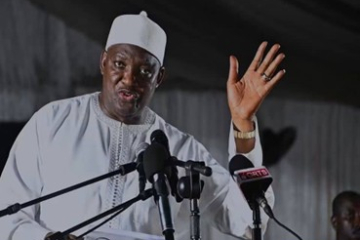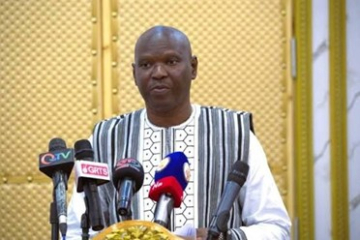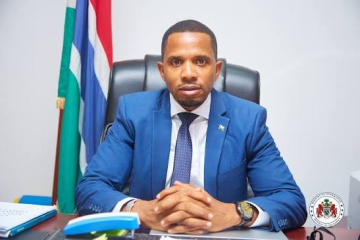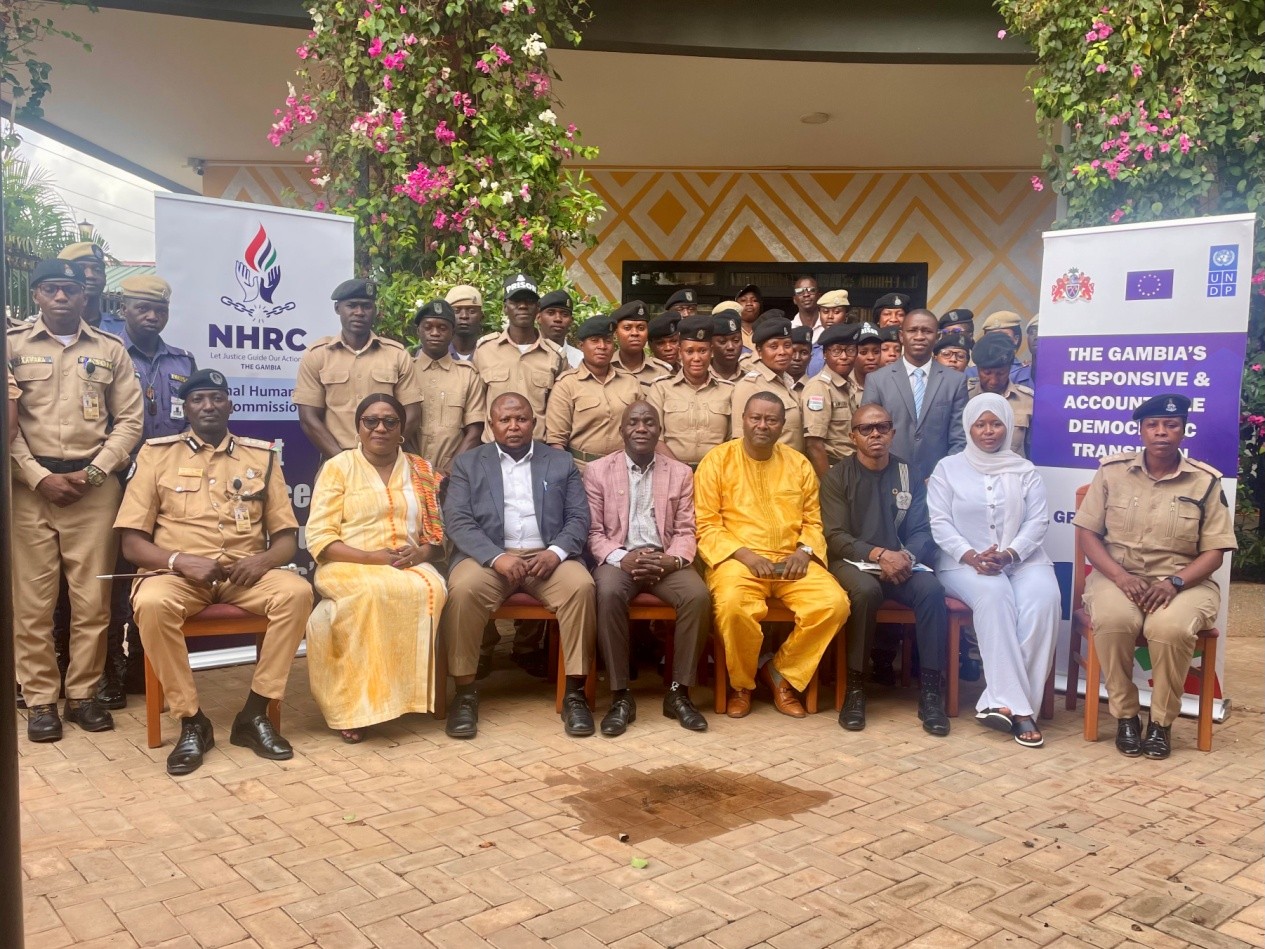
The training aims to strengthen prison officers’ understanding of international human rights standards, anti-torture safeguards and accountability mechanisms.
Speaking at the opening of the training, NHRC Chairperson Emmanuel Daniel Joof said respect for human rights must become a core culture within custodial institutions.
“We are not keeping animals. We are keeping human beings,” Joof told prison officers, government officials and development partners.
He reminded participants that although inmates may have lost their freedom, they have not lost their humanity or constitutional protections.
“They may be behind bars, but they remain protected by the Constitution, the laws of the country, international treaties and their inherent human dignity,” he said.
Joof linked prison reform to the country’s post-dictatorship transition, noting that findings of the Truth, Reconciliation and Reparations Commission (TRRC) exposed widespread abuses within detention facilities during the former regime.
“The promise of ‘Never Again’ must be more than a slogan. It must be reflected in institutions that respect rights and uphold accountability,” he said.
He stressed that institutional reform requires continuous investment in training and professionalism, arguing that respect for human rightsstrengthens rather than weakens security.
“Facilities where rights are respected tend to be safer, more stable and easier to manage,” he added.
Joof acknowledged some progress within correctional facilities but said significant challenges remain. He noted that the NHRC’s detention-monitoring visits continue to highlight areas requiring improvement.
James P. Monibah, UNDP Programme Manager, described prison reform as a critical component of The Gambia’s transitional justice process.
“Human rights do not stop at the prison gates. Every prisoner, regardless of circumstances, retains their inherent dignity and fundamental rights,” Monibah said.
He disclosed that 100 prison officers benefited from similar training in 2024 and 2025, while an additional 60 officers are expected to complete training this year, bringing the total number of beneficiaries to 160.
Deputy Permanent Secretary at the Ministry of Interior Lamin Jatta said correctional officers play a vital role not only in maintaining security and public safety but also in safeguarding the rights and dignity of persons deprived of their liberty.
“The manner in which we treat those in our custody serves as a true reflection of our nation’s commitment to justice, humanity and democratic governance,” Jatta said, urging officers to apply the knowledge gained from the training in their daily duties.
For his part, Deputy Director General of the Gambia Prison Service Modou Jarju said the institution is gradually shifting from a punitive approach towards rehabilitation and reintegration.
“Our success is measured not just by the security of our facilities, but by the dignity with which we treat those in our custody,” he said.
Mulia Colley, representatives of the Office of National Security (ONS) reaffirmed their commitment to strengthening professionalism and promoting a rehabilitation-center correctional system.