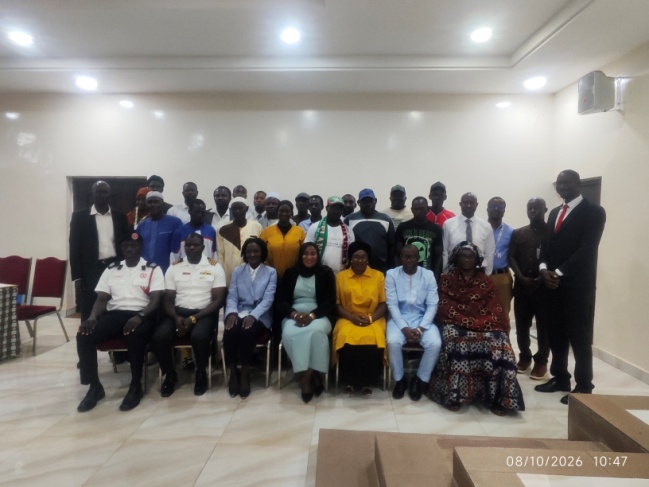
The validation held on Monday, August 10, 2026, at the Baobab Hotel in Bijilo, is aimed at strengthening institutional communication systems, improving stakeholder engagement, and enhancing public understanding of maritime safety, regulatory compliance and environmental protection.
Maritime governance involves complex regulatory responsibilities that require clear and structured communication with multiple stakeholders. These include shipping operators, maritime workers, port authorities, security agencies, coastal communities, development partners, and international maritime institutions.
In recent years, the sector has faced evolving challenges such as maritime safety incidents, environmental risks including ship-source pollution, security threats at sea, and climate impacts on coastal ecosystems.
GMA officials said these dynamics make effective communication a strategic requirement for maritime governance, not just a visibility tool.
The Communication Strategy seeks to ensure that staff are consistently informed of GMA policies, operational priorities, and regulatory developments. It will also strengthen institutional coordination and internal alignment.
Specifically, the plan defines clear internal communication protocols within the GMA to improve information flow between leadership, technical departments, and operational staff.
It also establishes structured protocols for sharing information with external stakeholders, including maritime operators, shipping agents, seafarers, government institutions, development partners, and the public.
At the validation, Olimatou Danso-Malang, Director General of The Gambia Maritime Administration, said effective communication is essential to promoting transparency, strengthening public confidence, and ensuring stakeholders understand the GMA’s mandate, priorities and achievements.
“The strategy document will provide a clear and coordinated framework for engaging our stakeholders and positioning the GMA as a trusted, authoritative, transparent, and responsive voice in maritime governance,” she said.
She urged participants to contribute openly and constructively to ensure the final strategy is practical, inclusive, and aligned with the Administration’s institutional objectives.
Project Consultant, Rohey Samba-Jallow, also applauded participants for their input in shaping the strategy.
She noted that the maritime sector is a specialised field and assured that the document will be aligned with maritime standards, safety requirements, and governance rules.