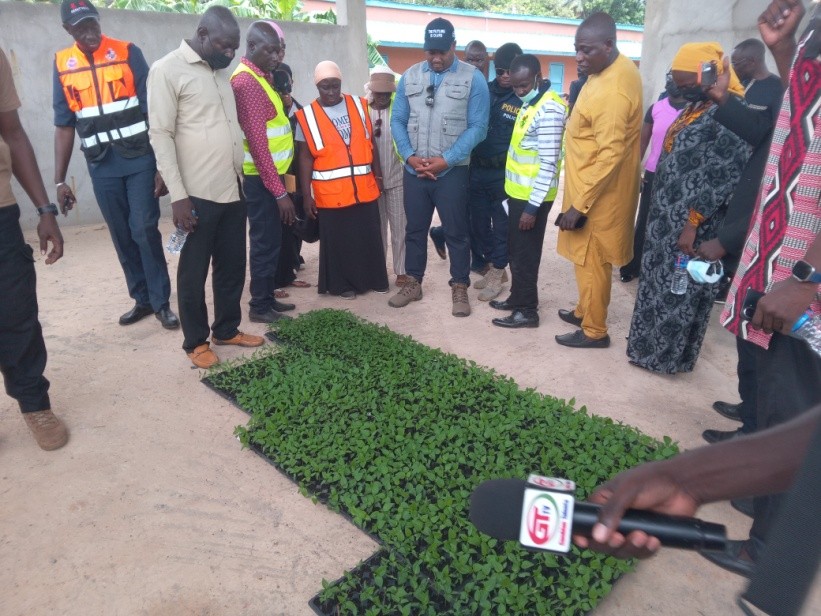
Mr Talib Ahmed Bensouda made the statement while at the compost plant in the Bakau Women’s Garden. Implemented in collaboration with Mbolo Foundation and funded by the European Union, the project is part of the Zero-Waste Project. The plant turns waste from markets and the Bakoteh Dumpsite into organic fertiliser for the women gardeners. As a plant powered by solar, officials noted that it is the first of its kind in Africa.
Cognisant of the food security challenge the country faces, which leads to massive importation and other factors, Mayor Bensouda underscored that the project “is about feeding the nation, feeding households”.
Referring to the garden and the crops, he added: “So this is not imported food. This is food grown in The Gambia. But even better, we are connecting both the growing of food and the feed the food needs to grow, which is the fertiliser, the compost. And now what we are basically saying is that we are growing things, selling them and the waste we are turning back into fertiliser to grow more things.
“So it is a circular economy. This garden demonstrates even more the diversity of the solution. Right behind you, you have a cold storage facility. That facility is meant to reduce the amount of spoilage from the garden, meaning when the women harvest their produce, what they cannot sell, they can freeze. But if at all they cannot sell it at all and it turns into waste, they can throw it here for compost.
“And right in front, what do we have? A market. So in this very facility, what you see is a circle. You have the garden to grow, you have the market to sell, you have the storage, the cold freezer, to store what is left and you have the compost to turn the waste into fertiliser. Can you imagine? So this is creating employment, it is creating value and it is sustainable. We do not have to import anything. Everything they are going to use for their agriculture is made right here in the garden.”