According to him, increasing local production is the most sustainable way to protect consumers from external economic shocks.
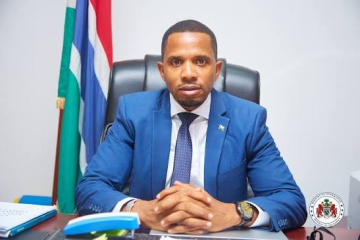
“In the medium to long term, the government’s priority is to reduce the country’s dependence on imported food products,” Minister Ceesay said.
He explained that his ministry is actively promoting private sector investment in agriculture to boost production and strengthen food value chains.
“My Ministry is therefore promoting private sector investment in the agricultural sector to increase domestic production, enhance agricultural productivity and greater investment in the value chain, including agro-processing,” he told the Assembly.
The minister argued that growing more food locally would help shield the country from fluctuations in global markets.
“It is only through commercial investment in the local production of our basic essential products that we can protect our economy from the impact of external shocks and help in effectively stabilising prices of essential goods,” he said.
During the session, lawmakers questioned whether low-income households could afford to wait for long-term solutions while food prices remain high.
However, the minister maintained that strengthening domestic production remains the key strategy.
He said his ministry is working closely with the Ministry of Agriculture to achieve that goal.
“The Ministry remains focused on promoting commercial investment and continues to work closely with the Ministry of Agriculture to achieve this objective,” he said.
The discussion also touched on measures aimed at reducing costs associated with importing essential goods.
The minister said efforts are being made to facilitate imports and support efficient handling of commodities entering the country.
Asked whether negotiations had taken place with shipping agencies regarding charges that affect consumer prices, Minister Ceesay said his ministry was not directly involved in those discussions.
“The negotiation at the port was a multi-stakeholder negotiation, but unfortunately, my ministry did not participate,” he said.
He added that the talks were led by the Ministry of Transport, together with the Gambia Ports Authority and other stakeholders.
While questions remain over possible subsidies or tax relief measures, the minister’s message to lawmakers was clear government sees increased local production and private sector investment as the main route to achieving stable prices and stronger food security.