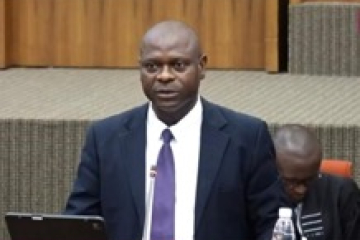
Speaking during the Mansa Kunda ministerial interface, Ceesay said the project is one of the country’s most transformative economic initiatives and preparations have now reached an advanced stage.
He disclosed that a feasibility study recorded an estimated 23% internal rate of return. The African Development Bank is supporting financing arrangements, and a dedicated Project Implementation Unit has been established at the Gambia Investment and Export Promotion Agency, GIEPA.
Land valuation and compensation assessments for affected landowners have also been completed and included in the proposed 2027 budget.
“We are seeing genuine waves of interest from both local and foreign investors eager to be part of this landmark development,” Ceesay said.
He added that the World Bank has committed to supporting the legislation required for the zone, while discussions continue with the Green Climate Fund to finance climate-resilient infrastructure.
The minister described the economic zone as a flagship model for regional integration and economic transformation.
Beyond the special economic zone, Ceesay said government is finalising the Digital Single Window Business Registration System to simplify business registration and encourage formalisation, especially for entrepreneurs outside the Greater Banjul Area.
He also announced that the review of the GIEPA Act has been completed, with a sustainable funding mechanism gazetted. GIEPA’s new permanent headquarters is nearing completion ahead of its planned inauguration next month.
Ceesay said MSMEs remain a priority. More than 4,050 MSMEs, particularly those owned by women and young entrepreneurs, are currently receiving targeted support. Over 350 enterprises in rice, poultry, maize, cashew and horticulture are also being digitally mapped to improve access to finance and markets.
Officials said investment projects registered in the first half of the year are expected to generate approximately 3,400 direct jobs in agriculture, manufacturing and information technology once implemented.
On overseas employment, the ministry said more than 120 Gambian domestic workers have been deployed to Saudi Arabia since 2025 under a bilateral labour agreement.
It also revealed that 50 additional workers under the circular migration program with Spain are awaiting final clearance. Six returnees from the first batch have been granted one-year visas and have returned to Spain.
Ceesay said while government will continue to facilitate safe labour migration, the long-term goal is to create jobs at home.
“Our primary responsibility is to produce in The Gambia, create jobs in The Gambia and build industries that can compete across the region and beyond,” he stated.