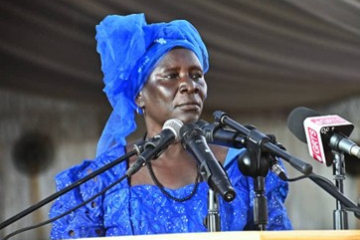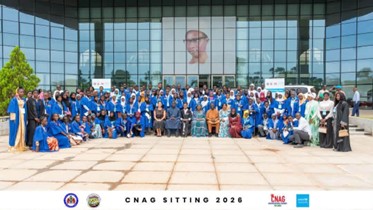
The sitting was held on Friday at the OIC with funding from UNICEF-Gambia. The Children National Assembly, established by the National Youth Council and the National Assembly in collaboration with UNICEF, is a non-statutory platform and safe space where children and adolescents discuss issues affecting them and engage policymakers.
Opening the 2026 annual sitting, CNAG Speaker Hon. Baboucarr Sowe, said children should not be treated merely as beneficiaries of development but as active partners whose voices matter in shaping the country’s future.
He acknowledged progress in areas including the enforcement of the law against female genital mutilation, social protection, birth registration, free basic secondary education, disability inclusion and child protection.
However, he said challenges remained, including overcrowded classrooms, inadequate facilities, limited opportunities for sports and development, and restricted access to specialised mental health and rehabilitation services.
A major concern raised during the sitting was the lack of safe recreational spaces for children.
Hon. Awa Jallow, Member for Banjul, said children in Banjul often return home from school exhausted but have few safe places to relax and connect with their peers. He pointed to the deterioration of McCarthy Square Park and warned that children could instead find themselves exposed to adult environments such as nightclubs and adult parties.
“Children are supposed to be in environments that support their growth, not give the other way around,” he said.
Another parliamentarian Hon. Sukai B Bojang, member for West Coast Region, warned unsafe environment takes children out of school and cuts short their dreams.
“Every child deserves a classroom before a wedding, a dream before a ring, and a future before a family,” she said.
Children with disabilities were also at the centre of the debate, with calls for accessible alternatives in examinations and greater inclusion in education and healthcare.
Hon. Kadijatou Darboe member for North Bank further questioned what happens after their resolutions are adopted, noting that there is currently no structured mechanism to track implementation and report progress.
The children called on government, the National Assembly, development partners and civil society organisations to strengthen investment, accountability and participation so that children’s voices translate into concrete improvements.