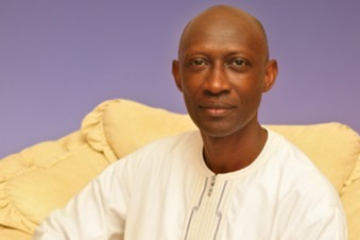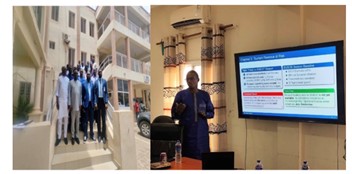
Presenting a policy brief on the economic implications of the conflict, Director of the Policy Institute, Dr Amadou Jallow, said The Gambia, despite being geographically distant from the Middle East, remains highly exposed to global shocks because of its dependence on imported fuel, food and other essential commodities.
According to Dr Jallow, the conflict has already triggered a petroleum import shock that has pushed fuel prices up by as much as 40 per cent, forcing the government to spend more than D500 million on fuel subsidies within just two months.
“The conflict is affecting the Gambian economy through multiple channels,” he said, noting that the country also faces significant risks linked to remittances, tourism and agriculture.
He revealed that about 87 per cent of The Gambia’s estimated annual remittance inflows of $872 million pass through corridors that could be affected by wider global economic disruptions. Remittances remain a crucial source of income for thousands of Gambian households and a key contributor to the national economy.
The policy analysis further highlighted concerns over the tourism sector, warning that uncertainty in global markets could negatively affect tourism revenues during the 2026/27 season. The study also pointed to increasing food and agricultural vulnerabilities, citing the country’s heavy reliance on imports and rising fertiliser prices ahead of the farming season.
Dr Jallow said the policy brief provides new data and recommendations aimed at helping policymakers mitigate the potential impact of external shocks on the economy.
The launch event featured a high-level panel discussion involving senior representatives from the Central Bank of The Gambia, the Ministry of Finance and Economic Affairs, the Ministry of Tourism and Culture, and the Ministry of Agriculture.
Panelists discussed a range of issues, including the country’s monetary policy response, the sustainability of the government’s fuel subsidy programme, tourism contingency planning and support measures for farmers. Particular attention was given to ensuring farmers have access to fertiliser and reliable market linkages amid rising production costs.
The discussion attracted senior government officials, representatives of international financial institutions, academics, development partners and members of the civil society.
Speaking at the event, Herbert Robinson, Vice Chancellor of the University of The Gambia, said the Centre was established two years ago with support from the United Nations Development Programme (UNDP) following a feasibility study that identified the need for a policy think tank capable of bridging the gap between research and policymaking.
“The University came up with the idea of establishing a policy institute that would regularly engage stakeholders on issues of national concern and contribute to a more informed approach to policymaking,” he said.
Also speaking, Lang Sanyang, Director of Research at the University of The Gambia, described the launch as a significant step towards strengthening the link between research, policy and development practice.
He said the Centre reflects the university’s commitment to ensuring that academic research contributes meaningfully to national development, evidence-based policymaking and sustainable development.
According to him, the Centre will serve as a platform for researchers, policymakers, development partners, private sector actors and civil society organisations to engage in constructive dialogue and generate evidence that informs public policy decisions.
He added that the institution plans to organise policy seminars, public lectures, roundtable discussions, research dissemination forums and stakeholder dialogues throughout the year as part of its mission to promote informed national discourse on key development challenges facing The Gambia.