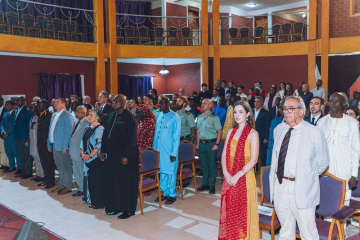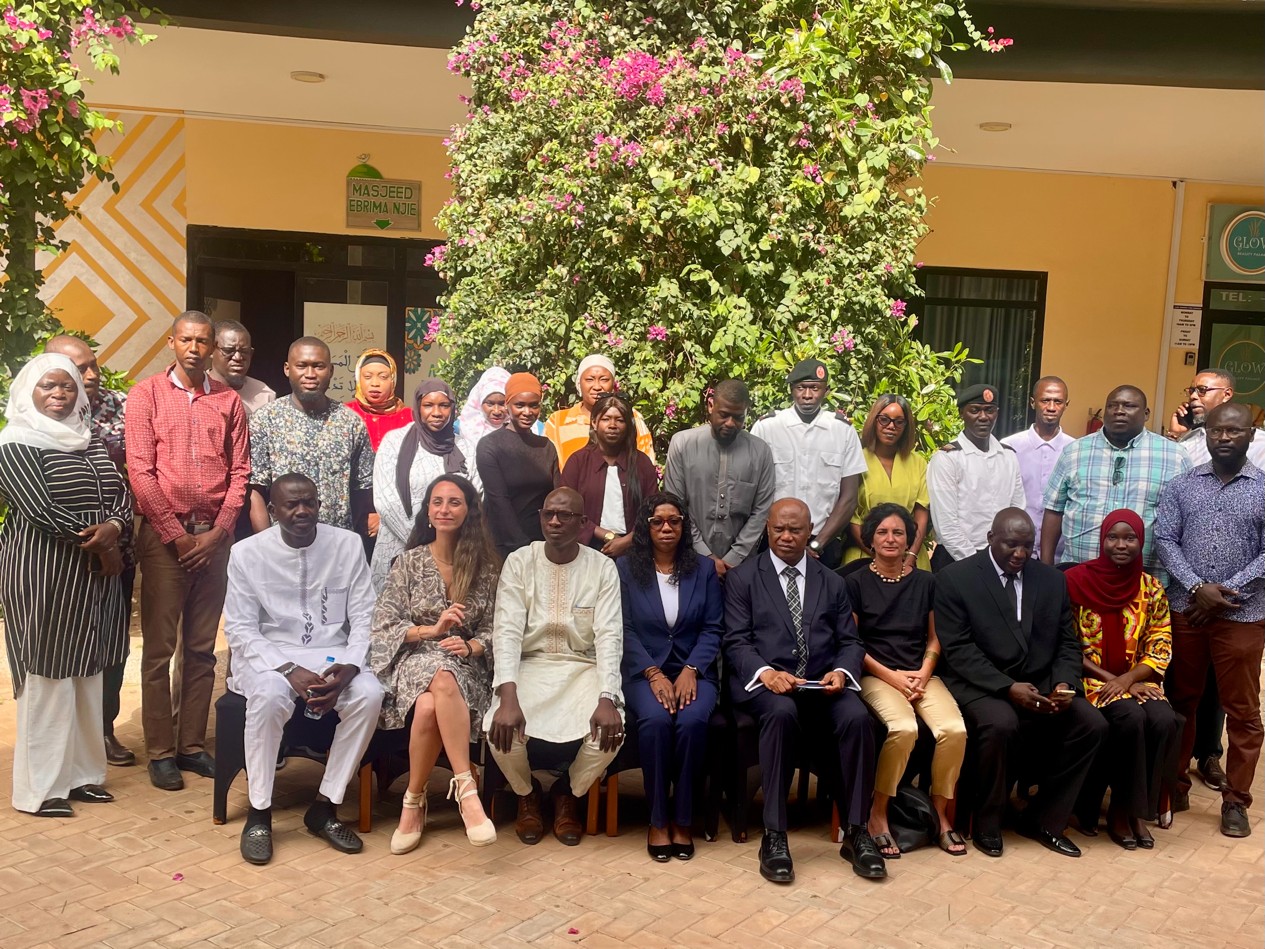
The training, organised by the Registrar General’s Department under the Attorney General’s Chambers and Ministry of Justice, aims to equip stakeholders with practical knowledge on how innovation and IP tools can be used to improve workplace safety and prevent work-related injuries and illnesses.
The workshop brings together participants from government institutions, the private sector and regulatory agencies to explore occupational health and safety challenges, innovative safety technologies, and the risks posed by counterfeit and substandard safety products. It also examines how intellectual property can be applied across key sectors including construction, manufacturing, agriculture, healthcare, logistics and mining.
The initiative is designed as a Training-of-Trainers program to build a pool of local resource persons who will cascade knowledge nationwide, strengthening workplace safety culture across both public and private sectors.
Opening the workshop, Registrar General Abdoulie Colley described workplace safety as a key national development priority, noting its direct link to productivity, economic growth and human dignity.
“Every accident avoided, every occupational disease prevented, and every safer process adopted contributes directly to productivity, national competitiveness and human dignity,” he said.
Mr Colley said intellectual property systems play a critical role in encouraging the development and adoption of safer technologies, including improved machinery, protective equipment, digital monitoring systems and safer industrial processes. He added that while many safety technologies already exist globally, stronger IP management and technology transfer can help The Gambia adapt and apply them locally through partnerships and licensing.
He reaffirmed government’s commitment to strengthening IP administration and creating an enabling environment for innovation while advancing occupational safety reforms.
Solicitor General and Legal Secretary Hussein Thomasi described safe and healthy workplaces as both a legal duty and moral responsibility.
He said intellectual property is often misunderstood as purely legal or commercial, but in practice it supports health innovation, technology transfer and safer working environments.
“Patents encourage safer machinery and protective equipment, while trademarks and certification marks help identify genuine safety-compliant products. Intellectual property is not abstract; it is a practical instrument that saves lives, protects workers and strengthens industries,” he said.
Mr Thomasi added that government is committed to modernizing IP laws, strengthening enforcement against counterfeit safety equipment, supporting research institutions and integrating IP awareness into occupational safety programs.
“The future of work in The Gambia must be safe, innovative and globally competitive,” he said.
Delivering the keynote address, WIPO expert Marina Nikolakopoulou highlighted the importance of prevention in workplace safety, referencing a tragic railway accident in Greece where failures in safety systems led to loss of life.
“Safety is not only paperwork. It is the ability to identify risk before it becomes a tragedy, detect danger early and prevent harm before lives are lost,” she said.
She explained that innovation plays a key role in prevention through tools such as sensors, alarms, monitoring systems and automated safety technologies.
Ms Nikolakopoulou noted that globally, about three million people die annually from work-related accidents and diseases, while 395 million suffer non-fatal injuries, many of which are preventable.
She said the WIPO Development Agenda project aims to strengthen the role of intellectual property and innovation in improving workplace safety and equipping countries with practical tools to reduce occupational risks.
“The training should not stop in this room. Participants must take this knowledge, adapt it, and share it within their institutions and communities,” she said.