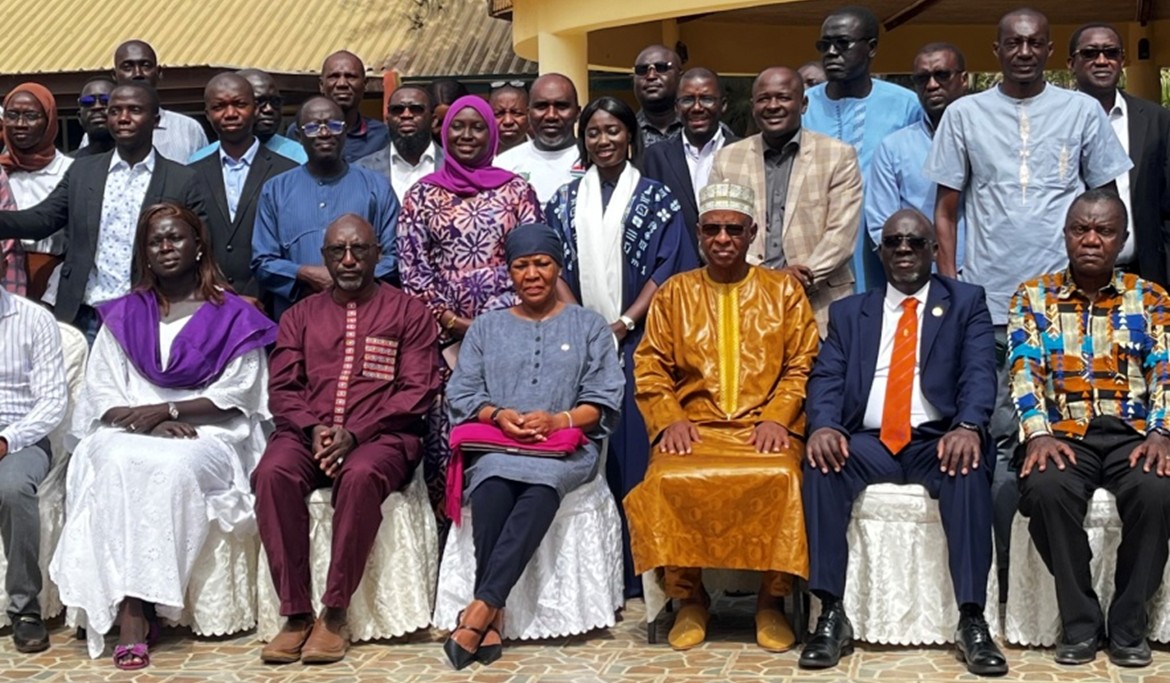
The launch, held at the Senegambia Beach Hotel, brought together government officials, development partners, regulatory agencies, farmers, exporters and private sector actors under a National Public-Private Dialogue Platform for SPS Governance. The initiative is spearheaded by the Food Safety and Quality Authority (FSQA) with support from the GIRAV Project, SPRING Programme, the European Union and COLEAD.
Speaking at the ceremony, Trade Minister Mod K. Ceesay described the establishment of the committee as a significant milestone in The Gambia’s efforts to fulfil its obligations under the World Trade Organization (WTO) Sanitary and Phytosanitary Agreement while safeguarding public health and strengthening agricultural trade.
He noted that the launch signals the country’s commitment to meeting the highest international standards in food safety, plant protection and animal health.
“Market access is no longer determined solely by price, product quality or geography,” the minister said. “Countries must demonstrate credible, science-based systems capable of protecting human, animal and plant health.”
According to him, the National SPS Committee provides the institutional mechanism needed to coordinate the country’s SPS obligations and ensure compliance with international standards. The committee brings together key institutions, including the Food Safety and Quality Authority, the Department of Plant Protection, the Department of Livestock Services and The Gambia Standards Bureau.
The Food and Agriculture Organization (FAO) Representative to The Gambia, Moshibudi Priscilla Rampedi, underscored the critical role of food safety, animal health and plant health in achieving food security and sustainable economic development.
She stressed that healthy crops and livestock are essential for protecting livelihoods, while outbreaks of diseases, pests and food contamination can have devastating consequences for public health, trade and economic growth.
Rampedi explained that FAO’s One Health approach recognises the close interconnection between human, animal and environmental health, making coordinated SPS governance increasingly important.
She described the launch of the committee as both timely and strategic, noting that SPS measures play a vital role in preventing pests, diseases and food safety hazards that threaten agricultural production and access to domestic and international markets.
She reaffirmed FAO’s commitment to supporting the Government of The Gambia, the FSQA and other stakeholders in strengthening SPS systems and advancing food safety objectives.
Chairman of the FSQA Board of Directors, Dr. Amadou Sowe, described the committee’s establishment as the culmination of years of collaboration among government institutions, development partners and technical experts committed to improving food safety and trade standards.
He said SPS responsibilities had historically been scattered across various institutions, creating coordination gaps, duplication of efforts and missed opportunities for market access.
“The establishment of this committee represents a decisive step toward a more coordinated national approach to sanitary and phytosanitary measures,” he stated.
Dr. Sowe emphasised that food safety, plant health and animal health should not be viewed merely as technical or regulatory requirements but as critical instruments for economic transformation and trade development.
He said the committee would serve as the institutional backbone connecting The Gambia’s trade ambitions with the technical standards demanded by international markets.
According to him, the committee’s success will depend on its ability to translate SPS measures into tangible market opportunities for Gambian farmers, processors and exporters.
Dr. Sowe called on government ministries, regulatory institutions, development partners, civil society organisations and private sector actors to view SPS governance as a shared national responsibility.