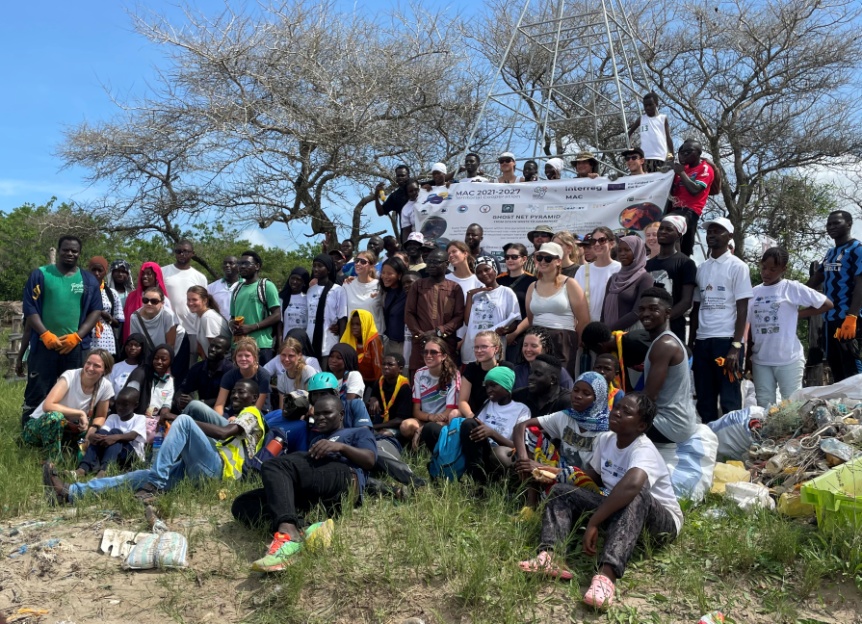
The initiative formed part of a community beach-cleaning exercise held on Sunday, August 16, at Gunjur Beach, followed by the opening of the Ocean Waste Pyramid.
The exercise, the first undertaken by the Gunjur Project in 2026, brought together community members, conservationists and partners to recover ghost nets and waste.
Jenny Ringstead, co-founder of the Gunjur Project, said the initiative is being implemented in partnership with CETAG, Precious Plastics, RISE Gambia, with support from the RECENTROS Interreg MAC 2021–2027 programme.
She said the focus is plastic waste, particularly fishing nets washing up along the Gunjur coastline.
According to Ringstead, the nets threaten marine life, with turtles, crabs and other animals becoming entangled and dying.
“When they’re left on the shoreline, turtles are getting stuck in them, crabs are getting stuck in them, marine life is dying because of these nets on the beach,” she said.
She explained that green plastic nets are difficult to recycle because they are twisted, contaminated and contain metal. Attempts to clean some had taken weeks, yet there was still no practical recycling option for certain types.
Ringstead said the Ocean Waste Pyramid was created to get the nets off the beach and clear turtle nesting areas.
“If we put them in trucks and take them to the dump site in Brikama, we’re taking one problem from our beach and taking it somewhere else,” she said.
She added that collaboration with the National Environment Agency would strengthen technical knowledge and help identify a long-term solution.
Lamin Jassey, chairperson of CETAG, said removing the nets is important for turtle monitoring because they obstruct nesting turtles and entangle marine animals.
He said the pyramid will also educate students, fishermen and community members.
“We cannot continue cleaning for the rest of our lives. That is why we also try to make sure we introduce education as part of the programme,” Jassey said.
He stressed that fishermen must take responsibility for unused nets and understand the dangers of abandoning them.
Meanwhile, Bubacarr Saho, head of CETAG’s Turtle Committee, said the organisation conducts regular beach clean-up and works with partners to protect the marine environment.
He said CETAG has more than 50 volunteers involved in conservation activities, including turtle monitoring and beach patrols.
Saho said the initiative raises awareness about discarded fishing gear.
“When it’s visible, people will see it and they will ask questions. And from there, you can give them answers,” he said.