Every election has a defining moment. It is the moment when people stop asking who is contesting and start asking who can truly deliver change. The Gambia has reached that moment.
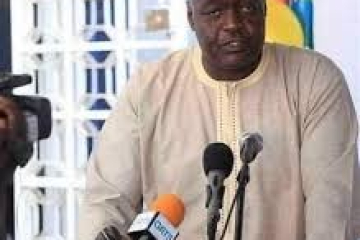
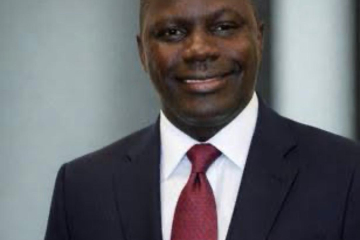
Across the country, a growing number of Gambians believe the next presidential election is shaping up to be a straight contest between President Adama Barrow and Talib Ahmed Bensouda of UNITE. While other political parties remain part of the national conversation, it is Bensouda who has captured the imagination of many citizens looking for a new generation of leadership.
UNITE has rapidly established itself as one of the country's most visible and energetic political movements. Its message has resonated with hundreds of thousands of Gambians who are frustrated by the rising cost of living, unemployment, insecurity and what they see as a lack of urgency in addressing these challenges.
After nearly ten years in office, President Barrow will have to defend his record. Elections are ultimately referendums on performance. The question before Gambians is simple: Are you better off today than you were ten years ago or even five years ago?
For many families, the answer is a resounding NO!
The prices of basic commodities continue to rise. Transport costs have become a burden. Housing is becoming less affordable. Young graduates struggle to find meaningful employment, while many parents work harder than ever simply to provide for their families. Every visit to the market reminds ordinary Gambians that the cost of living continues to squeeze household incomes.
It is this reality that has created a powerful demand for change.
Talib Bensouda represents that change for majority of Gambians. He belongs to a new generation of leaders who understand the aspirations of a country where young people form the overwhelming majority of the population. His leadership style is energetic, accessible and focused on delivering measurable results.
His appeal extends beyond the youths. Women, who bear much of the burden of rising household costs, increasingly want leadership that places economic relief, job creation and better public services at the centre of national policy. They want a safe environment for their children.
Unlike many politicians who ask voters to trust promises alone, Bensouda enters the national stage with eight years of executive experience as a two-term Mayor of the Kanifing Municipal Council. His supporters argue that he has demonstrated an ability to deliver tangible improvements despite operating under financial and institutional constraints. They contend that if he could achieve those results with limited municipal resources, he could accomplish even more with the authority and resources of the Presidency.
Public safety is another issue weighing heavily on the minds of Gambians. Communities want safer streets and stronger protection from crime. UNITE argues that restoring law and order must become a national priority through more effective policing, a stronger justice system and firm enforcement of the law.
Bensouda has also expressed support for restoring the death penalty for the most serious crimes, believing that tougher penalties would send a clear message that violent crime will not be tolerated. Whether Gambians agree or disagree with that proposal, there is little doubt that security will be one of the defining issues of the next election.
The coming election is therefore about much more than personalities. It is about two competing visions for The Gambia.
One vision argues that the country should continue on its current path.
The other argues that after a decade, it is time for a new generation of leadership with fresh ideas, renewed energy and greater urgency in confronting the economic and social challenges facing ordinary Gambians.
History shows that no government can rely indefinitely on yesterday's victories. Every administration must continually earn the confidence of the people. That confidence is tested most clearly at the ballot box.
As the campaign gathers momentum, one message is becoming increasingly difficult to ignore: many Gambians are not simply looking for another election—they are looking for a new beginning.
Whether that desire for change is strong enough to produce a new President will ultimately be decided by the voters.
But if the growing enthusiasm surrounding Talib Bensouda and UNITE continues to expand across the country, President Barrow may well face the most formidable political challenge of his presidency.
The next election will not be decided by history. It will be decided by hope, performance and the confidence Gambians place in the future.
For an increasing number of citizens, that future bears the name Talib Ahmed Bensouda.