“Inna Lillaahi Wa Inna Ilayhi Raji’un”
“From Allah we came, and to Him we shall return”
Today, 25th May 2026, Banjul bows its head.
The James Senegal Street catchment area stands silent.
The Gambian Muslim ummah mourns a pillar whose call to prayer did more than mark the hours — it shaped lives, steadied hearts, and reminded a generation that even in the noise of the world, Allah’s remembrance must come first.
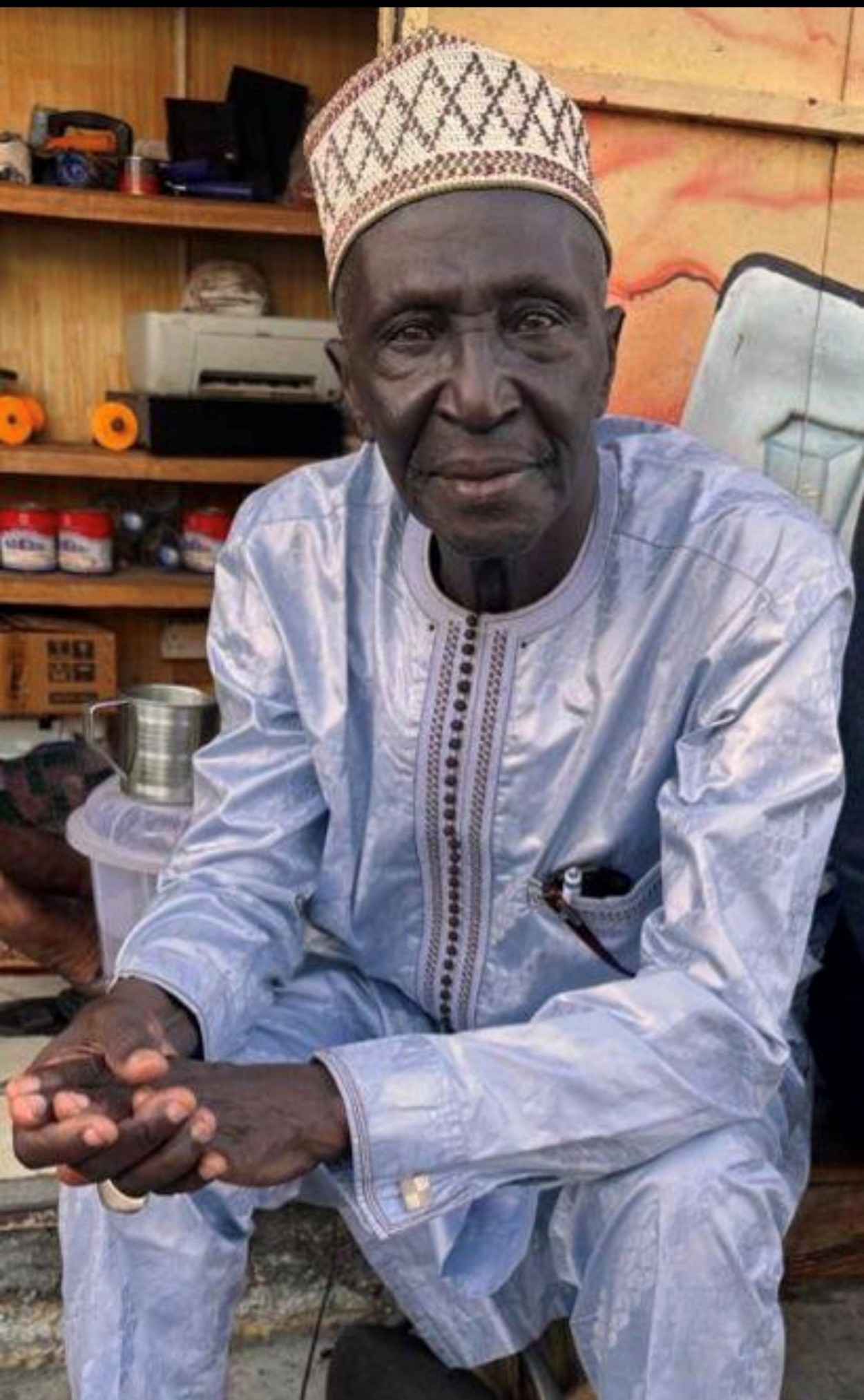
With heavy hearts, we therefore bid farewell to Imam Alhaji Ebou Njie, a prominent and distinguished figure of Banjul in the 1950s, 60s, 70s, and 80s, and a servant of Allah whose life was spent in the sacred station of “Imamah”.
- The Imam Of The People
Imam Ebou Njie was not a man of titles for title’s sake.
He was a man of the “adhan”, of the “mihrab,”and of the people.
In an era when Banjul was smaller, closer, and every street knew its neighbours, he became the spiritual anchor of James Senegal Street and beyond.
He led not from a distance, but from within the community.
He knew the names of the children who ran late to Maghrib.
He knew the widows who needed a word of comfort before Fajr.
He knew that leadership in Islam is not measured by the length of the sermon, but by the depth of mercy shown after it ends.
As Imam, he carried the weight of “amanah” with genuine humility.
He stood where the Prophet Muhammad ﷺ stood, leading the faithful in submission to the Lord of the Worlds.
In that station, there is no room for arrogance — only for sincerity, patience, and the constant fear and hope of Allah.
- A Life Woven Into The Fabric Of The Banjul Communities And Beyond
The 50s, 60s, 70s, and 80s were decades of change in The Gambia.
Independence came, institutions grew, and the city moved faster.
But in the heart of Banjul, especially, Imam Ebou Njie remained a constant.
He was of the generation that understood Islam not as a ritual performed on Fridays alone, but as a way of life that ordered the market, the home, and the street.
He taught through presence more than proclamation.
His character became the “khutbah” that young men and women read without a book.
For the elders of Banjul, he was a counselor.
For the youth, he was a steady hand.
For the ummah, he was proof that a man could live in the world without becoming of it.
- The Scholar’s Reward
The Prophet ﷺ said, “When a man dies, his deeds come to an end except for three: ongoing charity, beneficial knowledge, or a righteous child who prays for him.”
Imam Ebou Njie leaves all three.
His ongoing charity is in every prayer that he led, every dua that he made for the living and the dead.
His beneficial knowledge lives in the hearts of those that he taught, directly and by example.
And his righteous descendants stand today, grieving but praying, carrying his name and his legacy forward.
We must therefore take solace in the promise of Allah:
“O soul at peace, return to your Lord, well-pleased and pleasing to Him. Enter among My servants and enter My Paradise”.
(Qur’an 89:27-30)
- Conclusion: The Call That Never Fades
Today at King Fahad Mosque, the fidaw will be held at 4:00 PM.
After Asr, the Janaza prayer will be offered, and his body will be laid to rest at Old Jeshwang Muslim Cemetery.
Condolences will be received at Kanifing Estate.
But the true funeral of a man like Imam Ebou Njie does not end at the graveside.
It continues every time that a child in Banjul answers the call to prayer.
It continues every time that a neighbour remembers to check on another.
It continues every time that someone chooses patience over anger, mercy over revenge, and Allah over desire.
In the final analysis, it is the “Nur” that remains.
And so Imam Alhaji Ebou Njie has returned to his Lord.
May Allah forgive his shortcomings, illuminate his grave with “Nurul Haq”, and admit him into Jannatul Firdaws among the “Mumins”, the truthful, the martyrs, and the righteous— what an excellent company that they are.
To the Njie family, to the elders of Banjul, Greater Banjul and beyond, to the James Senegal Street community, and to all who were touched by the late Imam Ebou Njie’s life: bear this loss with “sabr” and “ridha”.
For the death of a scholar and mentor is a crack in the earth through which light pours out, and that light is the remembrance of what he stood for.
Imam Ebou Njie’s voice is now silent on earth.
But in the heavens, his record speaks. And in our hearts, his example remains.
Rest in peace, Ya Imam.
You called us to Allah.
Now Allah has called you.
May He welcome you with the words: “Enter My Paradise.”
Ameen.
Hassan Gibril
(A Beloved Brother And True Friend)