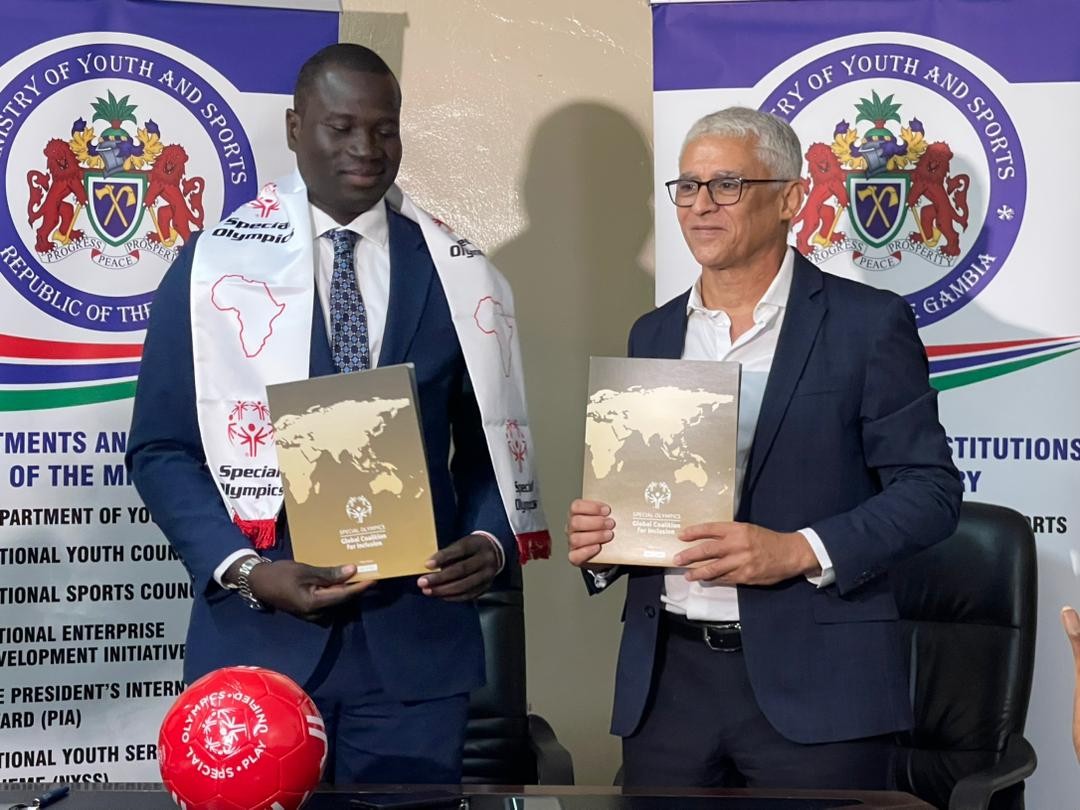
With this agreement, The Gambia officially becomes the 19th country and only the fifth in Africa to join the Global Coalition for Inclusion, a worldwide initiative aimed at transforming schools and communities by bringing children with and without intellectual disabilities together through sports, leadership training and shared learning.
Shawn Ferguson, Chief Global Relations Officer of Special Olympics International, applauded the leadership role played by in the movement.
He described the partnership as a powerful commitment to young people who too often remain unseen.
“We couldn’t be more thrilled this speaks volumes about the ministry’s dedication to people with intellectual disabilities,” Ferguson stated.
The Global Coalition, he added, was born out of the COVID-19 pandemic, when the world witnessed a glimpse of the isolation children with disabilities have always faced.
“It is nothing new for them to be left behind or left out,” he added.
According to Ferguson, The Gambia’s inclusion in the coalition will strengthen programs in schools, bringing students of all abilities together to play, learn and grow.
He however, revealed that the target includes expanding activities to 85 schools and reaching more than 2,700 students goals he believes are realistic with the government’s support.
“We will be a partner every step of the way,” he assured.
Youth and Sports Minister, Bakary Y. Badjie reaffirmed the government’s commitment, promising full support to ensure the objectives of the MOU are met. He praised the leadership of Special Olympics Gambia and expressed confidence that the partnership will uplift countless young Gambians.
“This is significant, and we will continue to support the program,” Minister Badjie said.
He also highlighted The Gambia’s dedication to global commitments such as the UN Sustainable Development Goals and the Convention on the Rights of Persons with Disabilities areas where Special Olympics programs can help deliver real results.
Charles Nyambé, President and Managing Director of the Special Olympics Africa Region, echoed that commitment. He stressed that unlike many MOUs that are signed and never acted on, this partnership will come with hands-on support, training and resources for teachers and schools. A detailed manual, baseline studies and impact assessments will guide the program over a three-year period.
“This is not cosmetic. It is about making people’s lives better,” Nyambé said. He highlighted the problems faced by youth with intellectual disabilities, describing them as “the most marginalized because their disability is invisible.”
Nyambé also shared success stories from other countries, particularly Kenya, where unified sports programs have transformed school environments. Bullying dropped, attitudes shifted, academic performance improved and friendships blossomed across differences. “Sports changes attitudes, students begin to see skills, not disabilities.”