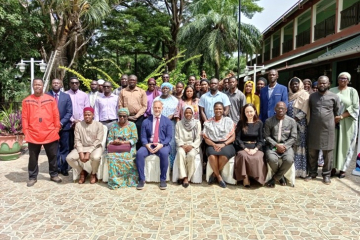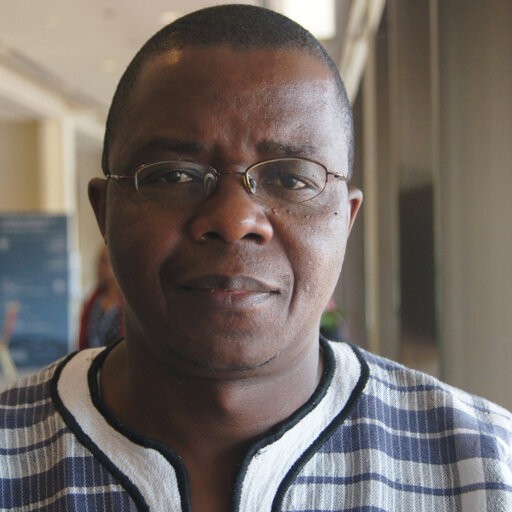
Professor Yaffa made these remarks at a one-day stakeholder information session announcing a major initiative: the launch of an eight-month Diploma in Climate Action (2025–2026) program, scheduled to begin in March 2026 as a short-term professional course.
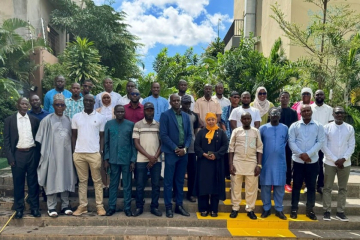
The forum, organised by the University of The Gambia (UTG) through the School of Agriculture and Environmental Sciences and the National Climate Action Centre (NCAC), was held at the NCAC–UTG campus to introduce the newly approved programme.
Professor Yaffa emphasised that strong collaboration between the University and national stakeholders is essential for the long-term success of the initiative.
“The University of The Gambia and NCAC cannot deliver this programme in isolation,” he said, adding that institutions are key partners in providing real-world case studies, field engagement opportunities, data access, guest expertise, and applied learning environments.
He noted that the strength of the diploma will come not only from classroom instruction but also from how effectively it connects learning to real Gambian development challenges.
Professor Yaffa further stressed that capacity building must empower professionals to design inclusive solutions that respond to the needs of women, youth, rural communities, and marginalised groups. He commended the programme’s focus on inclusion, community engagement, and applied learning.
Expressing optimism, he said the Diploma in Climate Action will contribute significantly to strengthening national resilience, supporting climate-smart development, and producing a new generation of professionals capable of leading climate action efforts in The Gambia and beyond.