SOS Children’s Villages The Gambia has called on the government, development partners and the private sector to increase investment in the local production, use and commercialisation of organic fertiliser as part of efforts to promote sustainable agriculture, improve food security and strengthen the livelihoods of vulnerable farming communities.
The organisation said promoting organic fertiliser production would not only protect the environment and improve soil fertility but also reduce farmers’ dependence on imported chemical fertilisers, whose rising prices continue to place pressure on agricultural production.
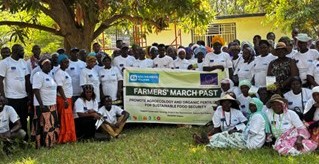
The call was made on Thursday, November 19, 2026, during a Farmers’ March Past organised under the European Union-funded Monetising Waste for the Promotion of Organic Fertilisers in The Gambia (MoWPOF) Project at SOS Children’s Villages.
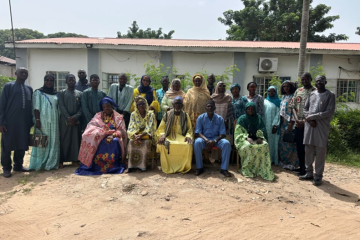
The march brought together women and men farmers from different project locations, alongside traditional leaders, representatives of local authorities, government officials, development partners and other stakeholders to demonstrate their collective commitment to agroecology, environmental sustainability and food security.
Speaking at the event, Samba Touray, project coordinator, said the initiative had made significant progress in raising awareness about the value of organic waste and its potential for producing organic fertiliser.
He explained that the project had engaged community members, farmers and local stakeholders through advocacy, awareness programmes and social media platforms to encourage the adoption of sustainable agricultural practices.
According to him, the Farmers’ March Past was more than a public procession, describing it as a collective statement of commitment to sustainable agriculture and environmental protection.
Mr Touray called on policymakers, development partners and the private sector to support the development of a strong organic fertiliser sector in The Gambia.
He said agriculture remained an important source of livelihoods and employment, particularly for women and young people, adding that increased investment in organic fertiliser production could create economic opportunities while strengthening the country’s food production systems.
He emphasised that women and young people must not be left behind in agricultural development, noting that women play a critical role in food production and household nutrition, while young people have the potential to drive agricultural entrepreneurship and employment.
Also speaking, Alieu Bojang, Programme Development Manager at SOS Children’s Villages The Gambia, said the organisation’s involvement in livelihood support was rooted in its broader commitment to child protection and family strengthening.
He explained that the organisation recognised economic hardship as one of the major factors contributing to family separation, noting that many vulnerable families depend heavily on agriculture for their livelihoods.
Mr Bojang said SOS therefore considered it important to support families economically so they could provide adequately for their children and reduce the risks of family separation.
He said the MoWPOF Project was established to address waste management challenges while promoting the production of organic fertiliser, particularly among women gardeners.
He further raised concerns about the negative effects of chemical fertilisers on human health and soil quality, warning that continued soil degradation could undermine food security.
Mr Bojang also pointed to rising global fertiliser prices, saying The Gambia’s dependence on imported fertilisers exposes local farmers to international price fluctuations and increased production costs.
He argued that strengthening local organic fertiliser production and commercialisation could provide an alternative while reducing the country’s dependence on imported agricultural inputs.
“The technical ability and know-how are now there. The willingness and awareness of gardeners and farmers are also there,” he said, urging stakeholders to support local production, use and commercialisation of organic fertilisers.
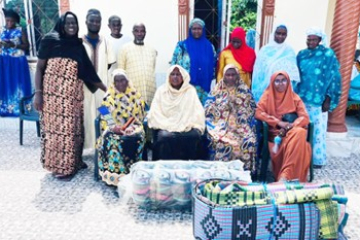
Meanwhile, Ramatoulie Jammeh, President of Sukuta Women’s Garden, expressed appreciation to SOS Children’s Villages for its support, saying the organisation had helped women gardeners improve their agricultural activities through the provision of organic fertilisers, tractors and other farming support.
She said the project had also introduced them to practices they previously lacked the knowledge to implement.
She encouraged farmers to embrace organic fertilisers, noting that “they are less harmful and beneficial” to agricultural produce.
Similarly, Aminata Baldeh, President of Basse Tambajang Garden, said the project had strengthened her confidence and improved the capacity of women farmers.
She said beneficiaries had received support, including motorbikes, alongside training in organic fertiliser production, food preparation, cleanliness and proper hygiene practices.
She thanked SOS Children’s Villages for empowering women gardeners and improving their livelihoods.
The project continues to highlight the importance of community participation, sustainable waste management and women’s economic empowerment in strengthening agricultural development in The Gambia.