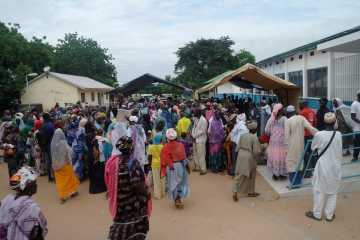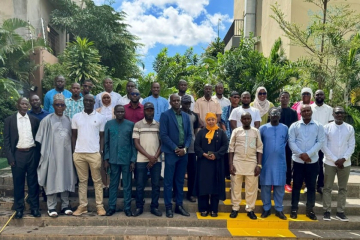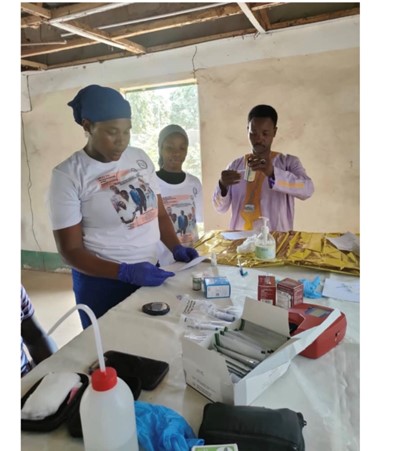
The community outreach initiative, organised in collaboration with surrounding communities, brought together residents of all age groups for free medical screenings, consultations and health awareness sessions aimed at detecting illnesses early and improving access to healthcare services.
Organisers said the exercise was designed to identify emerging health conditions before they become severe, while also creating awareness on critical health issues, including mental health, which they described as a growing concern in many developing countries.
The comprehensive screening included Rapid Diagnostic Tests (RDT), urinalysis, blood pressure and glucose checks, monitoring of haemoglobin levels, as well as objective and subjective data collection. Participants in need were also provided with medication by the medical team.
Speaking after the exercise, Sulayman Camara, an ophthalmic nurse and health sciences specialist from Atlantic International University in the United States, described the initiative as a major demonstration of community solidarity and commitment to public health.
He expressed satisfaction with the overwhelming turnout, noting that residents from across different age groups — including children, youths, mothers, fathers and the elderly — participated in the exercise.
“This clearly sends a message of the urgent need for accessible healthcare services in our community,” he said.
Mr. Camara explained that despite the success of the initiative, the absence of a permanent clinic posed major challenges for organisers and healthcare workers.
According to him, the lack of a health facility resulted in limited space and inadequate resources to effectively manage the large number of participants.
He further highlighted shortages of medical equipment, supplies and personnel, saying these constraints affected the team’s ability to provide services efficiently.
The absence of a dedicated laboratory service, he added, also restricted the conduct of some essential diagnostic tests during the exercise.
“To ensure the continuity and expansion of this initiative, there is need for stronger collaboration and support from the Ministry of Health and regional authorities,” he stated.
Mr. Camara stressed the importance of establishing a permanent healthcare facility in Serrekundanding, noting that such a development would significantly improve emergency response services, including access to transportation and ambulance support.
“With the necessary support and logistics, this initiative can become a regular and more successful programme that will greatly benefit the people of this community,” he stated.
Another resident and healthcare worker, Omar Saidy, also commended the exercise, describing it as an important intervention that could help strengthen healthcare delivery in the community.
He expressed concern over the financial burden associated with organising the programme, explaining that community members had to mobilise resources independently to ensure its success.
“We are pushing ourselves to the limit,” he said. “Our ultimate goal is to sustain this effort until the community has its own health center.”
Mr. Saidy called on the Ministry of Health, development partners and private institutions to support efforts aimed at establishing a health post in Serrekundanding.
“Transportation is always a problem when we have emergencies, and this can be critical for a patient’s health,” he bemoaned.
Residents say the initiative reflects both the determination of the youth and the urgent healthcare challenges facing the community, as calls continue to grow for improved health infrastructure in the area.