The expansion, funded by the World Bank and the Government of The Gambia, now extends the programme’s reach to additional districts in the Kombos, the Kanifing Municipality and Banjul, effectively making the Nafa cash transfer initiative nationwide.
Beneficiaries and implementing partners say the move is expected to provide critical support to thousands of vulnerable households through bi-monthly cash transfers and Social and Behavioral Change Communication (SBCC) activities aimed at improving livelihoods and resilience.
Although some implementing partners recently reported communication challenges during the enrolment process, officials say significant progress has since been made in reaching intended beneficiaries as registration exercises continue across different settlements.
The programme is being implemented by the National Nutrition Agency (NaNA), the Department of Community Development (DCD) and the Directorate of Social Welfare (DSW), which are currently overseeing enrolment activities in the newly added urban communities.
The RISE project, a Government of The Gambia initiative supported by the World Bank, seeks to create sustainable livelihood opportunities for extremely poor and vulnerable households across the country.
The project comprises five components involving various institutions and stakeholders, with the Nafa Programme serving as one of its key social protection interventions.
Currently, the Nafa Programme has been implemented in 36 districts nationwide. While 20 districts have already graduated from the programme, beneficiaries in the remaining 16 districts continue to receive a bi-monthly cash transfer of D3,000 alongside SBCC support activities.
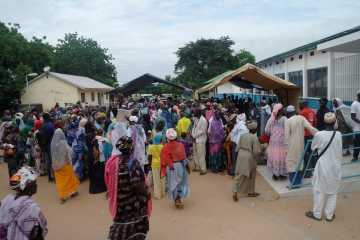
Speaking to journalists during an enrolment exercise held on Thursday at Youna Villa village, beneficiary Mariama Jallow expressed excitement over the inclusion of urban settlements in the programme.
She described the initiative as timely support for her family and said she intends to invest part of the funds into petty trading to improve her household income and long-term sustainability.
“This project will help my family a lot. I want to use part of the money to start a small business so that I can continue supporting my family even in the future,” she said.
Another beneficiary, Amadou Fatty of Kachumeh Tumbukutu village, said the support would not only help feed his household but also enable him to invest in livestock rearing and gardening.
According to him, such income-generating activities would help beneficiaries remain self-reliant even after the programme comes to an end.
He commended the Government, the World Bank and implementing partners for what he called a“bright initiative”aimed at improving the lives of vulnerable communities.
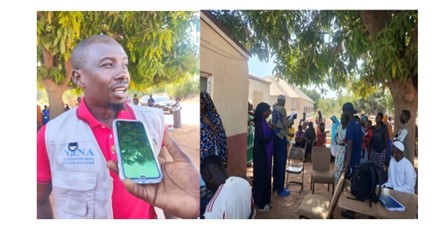
Meanwhile, Mafujie Jawara, NaNA Nutrition Field Officer for the West Coast Region, acknowledged that the enrolment process initially faced communication difficulties in some communities but noted that the situation has significantly improved.
“We started with sensitisation, then validation, and now the enrolment itself. Communication is improving and the process is becoming much easier as we move from one settlement to another,” he explained.
Officials say the expansion of the Nafa Programme marks another important step in the government’s broader social protection agenda aimed at reducing poverty, strengthening resilience and promoting economic inclusion among vulnerable populations.