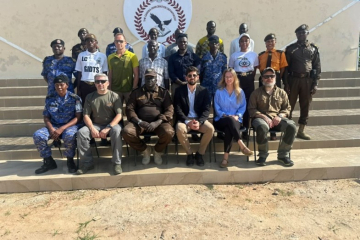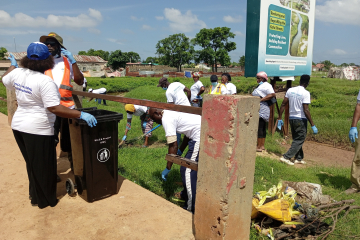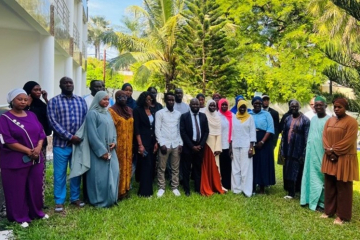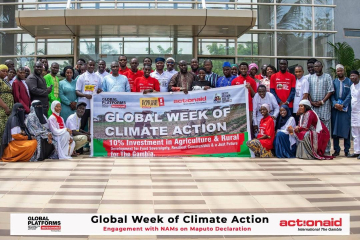
Beyond improving their own incomes, RICAR Change Agents is using project grants to stimulate job creation, boost food security, and promote environmentally friendly enterprises within their communities.
Some beneficiaries of the Rural Integrated Climate Adaptation and Resilience Building (RICAR) Project are emerging as local economic drivers by creating direct and indirect employment opportunities for Gambian youth, particularly in rural communities.
The RICAR Project is a five-year initiative funded by the World Food Programme (WFP) through the Adaptation Fund (AF) and implemented by the Ministry of Environment, Climate Change and Natural Resources (MECCNAR). The project operates in the Upper River Region (URR) and the Central River Region (CRR) north and south, with the overarching aim of strengthening the adaptive capacity of rural populations through climate-resilient and diversified livelihoods.
As part of its implementation strategy, RICAR partnered with the National Nutrition Agency (NaNA) to deliver Social and Behaviour Change Communication (SBCC) activities through Multidisciplinary Facilitation Teams (MDFTs) and trained Community Change Agents.
These Change Agents are now making significant contributions by using RICAR grants not only for personal economic advancement but also to generate employment opportunities for other youths through climate-smart enterprises.
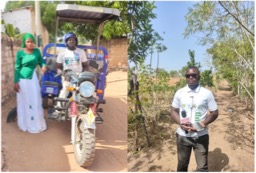
Speaking to reporters, Babucarr Singhateh, a RICAR Change Agent from Bukarou Kunda in Upper Fuladu west, CRR-South, said he is actively creating jobs through his one-hectare garden. According to him, his climate-resilient farming initiative currently provides employment to one full-time worker and between 10 and 15 contract workers within his community.
Mr. Singhateh, who received a D150,000 grant under the RICAR Project, has been engaged in gardening since 2021. He explained that the grant enabled him to expand his operations by installing a drip irrigation system, establishing a fish pond, constructing water reservoirs, and piloting a small-scale poultry project.
He said his decision to venture into gardening was motivated by the difficulty residents faced in accessing fresh vegetables, often travelling long distances to markets. “I wanted to reduce that burden by producing fresh vegetables locally,” he said.
Mr. Singhateh also highlighted the broader role of Change Agents in promoting behavioural change within communities, noting that climate change is largely driven by harmful human practices. “We were selected by our communities to share climate-related information received from RICAR and to sensitise people on sustainable practices,” he explained.
He added that their work demonstrates that livelihoods can be improved through gardening, animal husbandry, and other eco-friendly businesses without destroying forests or cutting down trees.
Similarly, Baratou Jallow, another RICAR Change Agent from Alatentu village in CRR-south, said she invested her D195,000 grant in purchasing a tricycle, creating employment for a rider while supporting farmers with affordable transportation services.
She explained that the tricycle is used to transport vegetables and other farm produce from gardens to markets, while income generated from the business is saved weekly at the bank.
The Change Agents were trained to conduct SBCC activities in their communities to promote climate change mitigation and adaptation. In addition, they were provided with grants to establish climate-smart businesses and agricultural ventures aimed at strengthening resilience, increasing incomes, and improving livelihoods across rural Gambia.