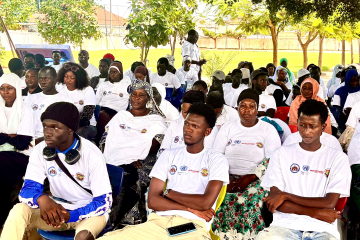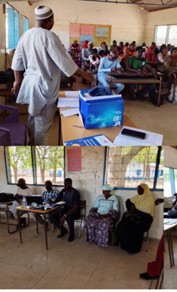
The training, which runs from 19 to 21 May 2026, targets Early Childhood Development teachers within the Jarumeh Koto and Panchang clusters under a pilot initiative designed to enhance early learning outcomes in selected communities.
The programme is being implemented by the Ministry of Basic and Secondary Education (MoBSE) through its ECD Unit in collaboration with Lively Minds. It aims to equip teachers with practical skills, methodologies and innovative approaches to strengthen parental involvement in children’s education.
Officials explained that the pilot intervention is intended to serve as a model for scaling up across other regions if successful.
Speaking during the opening ceremony held at the Jarumeh Koto Cluster, Ebrima Jatta, who delivered the welcome remarks on behalf of the Regional Education Directorate, commended stakeholders for selecting the region for the pilot phase. He highlighted the importance of strengthening the home school connection in improving early childhood learning outcomes.
Facilitators from MoBSE’s ECD Directorate in Banjul, including Twesigye John K, Sanneh, John Gomez, Nyima Ceesay, Nyanya Badjie and Isatou Mbakeh, led the technical sessions and practical demonstrations.
Regional Education Directorate officials present included Ebrima Jatta, Mamadou Kanteh, Suteh Manneh and Edrisa Camara, who also participated in the training activities.
During the sessions, PEO Sanneh introduced the project objectives and outlined expectations for participants. He further engaged teachers in interactive demonstrations, including educational games and group activities, dividing participants into six working groups to promote teamwork, participation and experiential learning.
The training focuses on empowering teachers to organise structured parenting sessions aimed at increasing parental engagement in early childhood education. Participants are being guided on how to use locally available materials such as songs, storytelling, play-based learning and educational games to support children’s cognitive, social and emotional development.
A key component of the initiative is to enable parents to actively support learning at home through structured eight-week parenting sessions facilitated by trained teachers. The sessions are expected to help parents develop practical skills to guide their children’s early learning and development beyond the classroom.
Organisers emphasised that the programme recognises parents as critical partners in shaping a child’s foundational education and seeks to build stronger collaboration between homes and schools to ensure continuous learning support.
To ensure quality implementation, the programme will be supported by regular monitoring, observation and supervision exercises conducted jointly by MoBSE’s ECD Directorate and technical teams from Lively Minds, including regional experts from Ghana and Uganda.