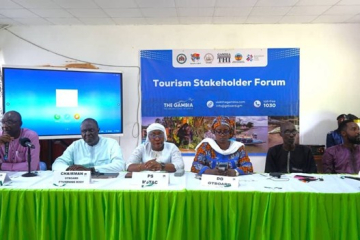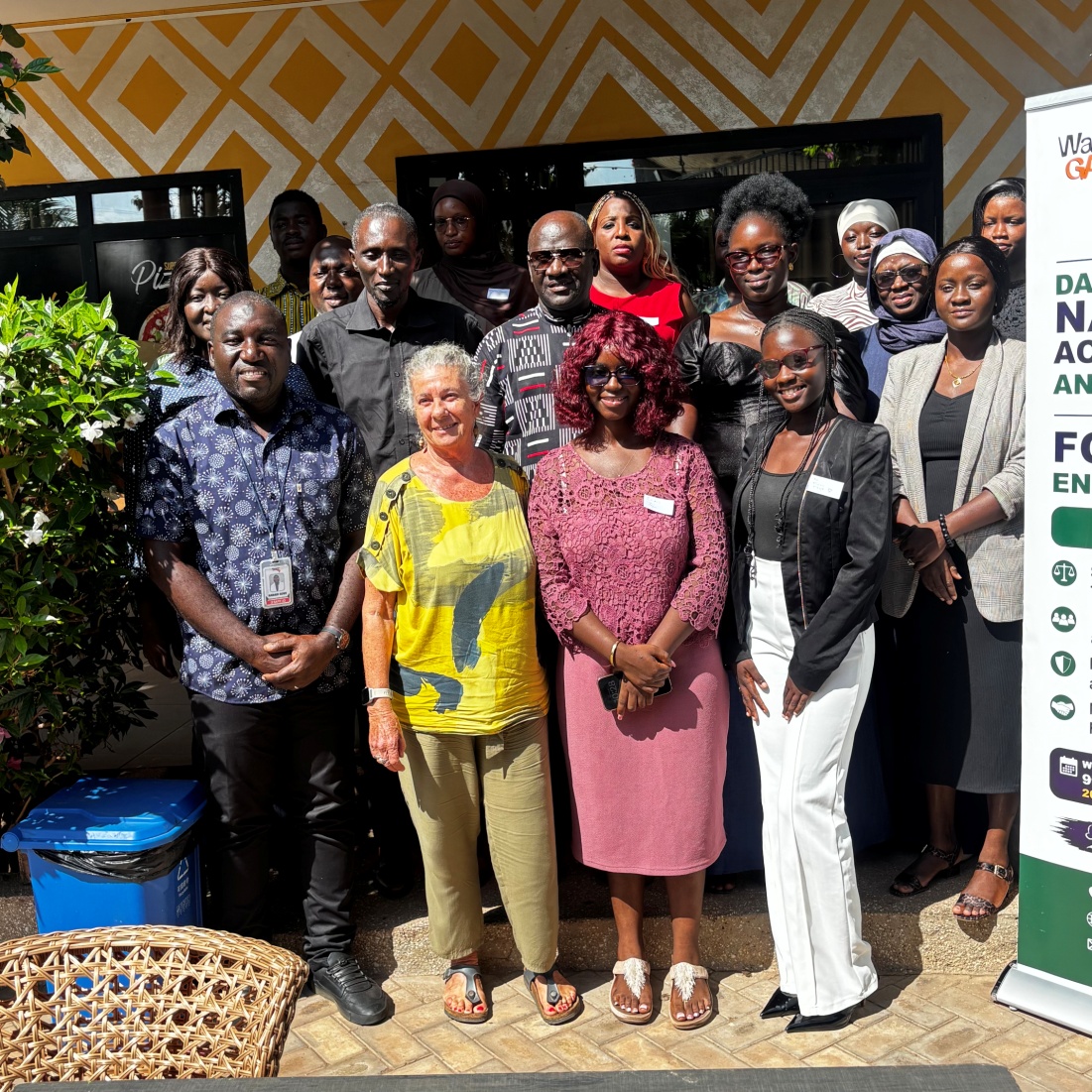
The call was made on Wednesday, August 19, 2026, during a One-Day High-Level Multi-Stakeholder Accountability Forum on Strengthening the Enforcement of the Anti-FGM Law in The Gambia, held at Bakadaji Hotel in Kotu.
The forum brought together medical doctors, FGM advocates, justice and health sector representatives, human rights institutions, civil society organisations, development partners, child protection stakeholders and the media.
The meeting comes at a time when FGM remains a major health, protection and human rights concern for women and girls, while recent attempts to repeal the Anti-FGM Act and the handling of recent cases have exposed gaps in investigation, evidence management, prosecution, survivor protection and institutional coordination.
Speaking at the forum, Hamdi Sowe, Research and Training Coordinator at Wassu Gambia Kafo, presented findings from the organisation’s research into the health consequences of FGM/C in The Gambia.
He said a 2011 study clinically examined 871 women and girls across all six regions of the country. Of those examined, 66.2 percent had undergone Type II FGM/C, 26.3 percent Type I and 7.5 percent Type III.
According to Sowe, 299 of the 871 women and girls, representing 34.3 percent, experienced immediate or late complications.
He stressed that complications were not restricted to the most severe forms of FGM, noting that Type I also caused complications in about one in five patients.
The study recorded complications among 23.7 percent of Type I cases, 55 percent of Type II cases and 55.4 percent of Type III cases.
“Infection” was identified as one of the most common immediate complications, often linked to haemorrhage.
Sowe also presented findings from a 2013 study involving 588 women, with 570 included in the final analysis. The study found that 75.6 percent had undergone FGM/C and reported higher rates of painful menstruation, vulvar and vaginal pain, urinary problems and painful sexual intercourse.
The research also found a strong association between FGM/C and complications during childbirth.
Delivery complications were recorded in 11.7 percent of women who had not undergone FGM/C, compared to 39 percent among Type I cases and 65.9 percent among Type II cases.
Neonatal complications stood at 5.3 percent among women without FGM/C, compared to 15.6 percent among Type I and 37.8 percent among Type II cases.
Professor Adriana Kaplan, founder of Wassu Gambia Kafo, said the organisation has contributed to research and advocacy for the abandonment of FGM since its establishment in 1999.
Reflecting on the recent national debate surrounding the Anti-FGM law, she said the organisation’s clinical research conducted in The Gambia provided important evidence during discussions at the National Assembly.
She said the attempt to repeal the law was eventually rejected, but subsequent legal proceedings at the Supreme Court have made continued stakeholder engagement necessary.
Professor Kaplan said lessons from recent FGM cases should be used to strengthen police investigations, evidence gathering and prosecution.
“We need to come together and see how best we can move forward,” she said, stressing that decades of work to address FGM should not be lost.
She warned that developments in The Gambia could have consequences beyond its borders.
“The world is watching The Gambia. Africa is watching The Gambia,” she said, noting that the outcome could influence debates in other African countries.
The forum is part of Wassu Gambia Kafo’s initiative to strengthen institutional accountability and improve multi-sectoral coordination in the prevention of and response to FGM.