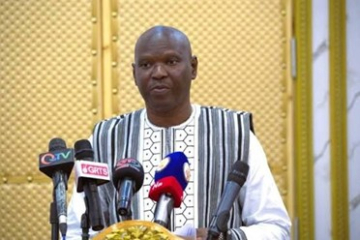
The Gambia Tourism Board (GTBoard) has announced the immediate suspension of all open-air music and public entertainment events within the Tourism Development Area (TDA), a move criticised by human rights activist Madi Jobarteh as draconian.
In a press release, the Board said the ban covers concerts, open-air music events, beach parties, festivals and other public entertainment events held within the TDA, including beaches.
"The Gambia Tourism Board hereby informs the general public, event organisers, entertainment establishments, visitors, and other stakeholders that, with immediate effect, all open-air music and public entertainment events within the Tourism Development Area (TDA), including events held on beaches, are suspended until further notice," the statement said.
According to GTBoard, the measure is precautionary to safeguard the tourism industry, maintain public order, and protect the safety of tourists, residents, workers and businesses within the TDA.
The Board said all organisers must comply fully and urged stakeholders to cooperate with security agencies.
It added that the situation will be monitored in consultation with security agencies, tourism stakeholders and local authorities, and that any decision to review or lift the suspension will be communicated through official channels.
"The Gambia Tourism Board appreciates the cooperation and understanding of all stakeholders and remains committed to maintaining a safe, secure, peaceful, and welcoming tourism environment," the release said.
Reacting to the directive, Jobarteh called on GTBoard to lift the blanket ban and focus on targeted security measures.
"What justifies the Gambia Tourism Board's decision to suspend open-air music and public entertainment events throughout the Tourism Development Area?" Jobarteh asked.
He argued that the Board invoked security without identifying a specific threat, explaining its risk assessment, or providing evidence that an indefinite blanket suspension is necessary.
"Invoking security does not relieve a public institution of its responsibility to explain and justify its decisions," he said.
Jobarteh said entertainment is integral to tourism, particularly around beaches, where concerts, festivals and beach parties attract visitors, sustain businesses and provide livelihoods for musicians, DJs, promoters, vendors and hospitality workers.
"How does GTBoard intend to safeguard tourism by shutting down an important part of it?" he asked.
He also questioned the scope of the directive, asking whether it includes events at hotels, restaurants, nightclubs and roadside businesses within the TDA and whether indoor entertainment is covered.
"Businesses should not have to guess whether their activities are prohibited or depend on the interpretation of individual enforcement officers," he said.
Jobarteh said if security is the concern, the Tourism Security Unit (TSU) should be strengthened through coordinated patrols, incident response and cooperation with businesses, rather than an industry-wide suspension.
He cited alternatives such as better-equipped TSU officers, targeted patrols, CCTV, improved beach lighting, clear security requirements for organisers and reliable channels for reporting threats.
The notice states the ban remains "until further notice," which Jobarteh described as unacceptable for a decision affecting livelihoods. He called for a clear review date, published criteria for lifting the suspension and regular public updates.
"In my view, this indefinite blanket ban is draconian, counterproductive, and indicative of a failure of leadership. The TDA requires competent management and effective security," Jobarteh said, urging GTBoard to disclose the legal basis of its decision, define affected activities, and explain review mechanisms.
He said public institutions must justify decisions transparently and proportionately, adding that where offences occur, law enforcement should target those responsible rather than penalise law-abiding businesses and workers.