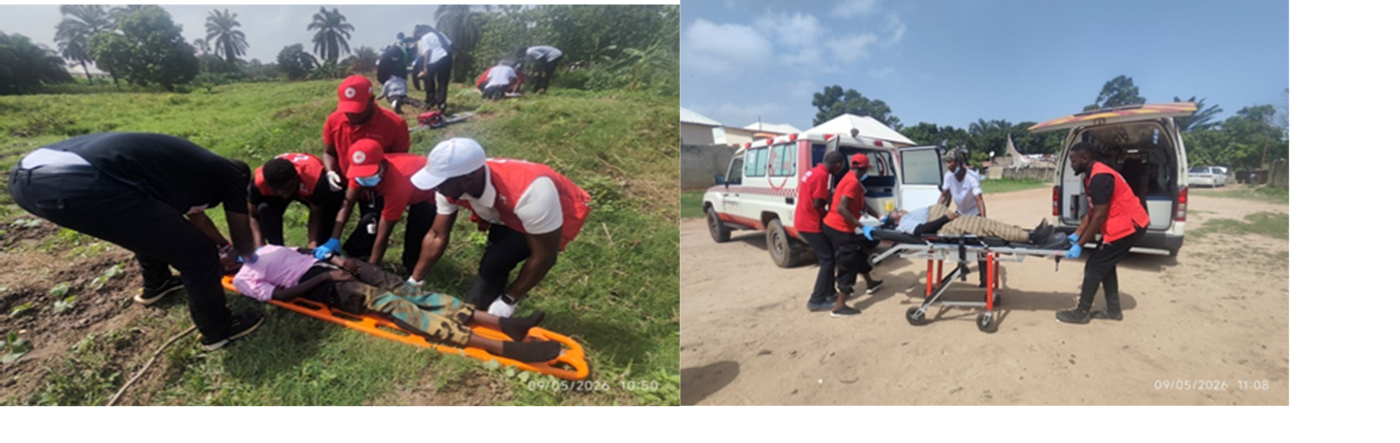
Funded by the West Africa Coastal Areas (WACA) Project, the exercise was organised in collaboration with the Gambia Red Cross Society, The Gambia Police Force, The Gambia Fire and Rescue Service, and the Epidemiology, Disease Control, Water, Sanitation and Hygiene Unit of the Ministry of Health.
The simulation scenario depicted a severe flooding incident in which a building collapsed following rising waters, affecting several residents, including pregnant women. The exercise also simulated two donkey carts being swept away by floodwaters.
As part of the operation, emergency alerts, known as "injects", were sent to participating rescue institutions, triggering an immediate coordinated response from first responders.
Affected individuals were rescued and transported to Kanifing General Hospital for medical attention, while the exercise scenario recorded two fatalities among those referred for treatment.
The simulation further indicated that nine people, including pregnant women, sustained serious injuries and were severely affected by the disaster.
Speaking to The Point shortly after the exercise, Momodou B.K. Ceesay, Interim Director of Operations at the NDMA, said the simulation was conducted as part of efforts to operationalise the Ward Disaster Contingency Plan developed by the agency in partnership with the WACA Project in 2024.
He explained that the exercise was intended to assess the preparedness of disaster management committees and evaluate coordination mechanisms between ward-level committees, regional disaster management committees and municipal disaster management structures.
“Since the development of the contingency plan, we have conducted simulation exercises to test the readiness of the committees and to assess collaboration among the various disaster management structures,” Ceesay said.
He noted that the exercise was particularly important because the WACA Project is being implemented in an area identified as a disaster hotspot.
According to him, the simulation was also designed to identify operational gaps, strengthen existing successes and improve the overall effectiveness of emergency response institutions.
Explaining how the exercise was coordinated, Ceesay said emergency scenarios were communicated through specially prepared injects shared via a WhatsApp group comprising operational heads of participating institutions.
“In the simulation exercise, we developed injects and these injects were shared through a WhatsApp group with operational heads who are all members of the group,” he explained. “The inject tells you what is actually happening, and first responders react to the information received.”
He commended health personnel and emergency responders for their swift response to the simulated casualties and praised community members for their strong participation in the exercise.
Ceesay said the successful conduct of the simulation demonstrated the importance of coordinated planning and collaboration among disaster management stakeholders in strengthening national resilience to flood emergencies.