For the first time since its creation in 1991, the United Nations mission in the Sahara will not see its mandate renewed. When the Security Council met on 30 October 2026, a draft resolution extending MINURSO gathered 11 votes, a clear majority of the Council. It fell nonetheless, struck down by a single veto from Russia.
In Rabat, the outcome was rednot as a setback but as a turning point. That same evening, a communiqué from the Royal Cabinet described the non-renewal as a major step towards closing the Moroccan Sahara file at the United Nations. “It is a page that lasted 35 years, and it has been turned from now on," the communiqué stated, adding that the Mission’s presence should end “in the coming days” and that the Security Council should cease to be seized on the matter.
The arithmetic of the vote matters as much as its result. Eleven members backed a text built on the Moroccan Autonomy Initiative as the only basis for a settlement, a position now shared by more than two-thirds of UN member states. The draft was the product of weeks of negotiation and more than a dozen amendments. Russia took no part in that work: it tabled no amendments, refused from the outset to discuss the American text, and rejected it without explanation.
Faced with that stance, Morocco refused to bend. Yielding to Russian pressure would have meant reopening the core parameters of the text and giving up the gains of the negotiations. Instead, Rabat left Russia to carry the full weight of its veto.
Behind the vote lies a deeper reality: MINURSO had long since outgrown the reasons for its creation. The Mission was named for a referendum, the "R" in its acronym, that the United Nations stopped pursuing more than two decades ago. It no longer has the staff, equipment, or budget to organize one, and the Secretary-General’s Personal Envoy, Staffan de Mistura, told the Council plainly last October that a referendum is not applicable.
Its second function, monitoring the ceasefire, has been hollowed out as well. Since the Polisario Front unilaterally announced in 2020 that it was abandoning the ceasefire, the Mission has operated in conditions that raise real questions about its relevance and its capacity to fulfill its original task.
Morocco did not wait for the vote to say so. It had proposed restructuring the Mission around a purely political mandate, halving its staff, and seeking the Secretary-General’s views on its future. The aim was to align the UN presence with the only political horizon that now commands broad support: autonomy under Moroccan sovereignty.
Rabat has been careful to frame what comes next. It reaffirmed its firm commitment to the ceasefire, in full respect of its territorial integrity and national security. It stressed that it seeks not to expel the Mission but to secure a dignified, respectful and orderly departure. And, as a long-standing contributor to UN peacekeeping, it pledged every facility needed for the withdrawal of MINURSO’s civilian and military personnel.
The UN political process now enters a pause, until its foundations and parameters are redefined free from the procrastination and obstruction of recent years. For Morocco, however, the direction is settled. A year after Resolution 2797 placed autonomy at the heart of the negotiations, the end of MINURSO marks the passage from a process built around a referendum to one built around a solution.
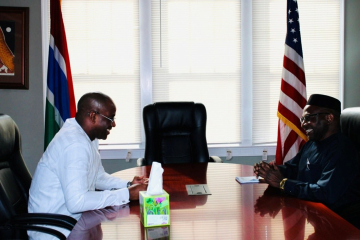
That shift is backed by Morocco’s partners on the ground. The Republic of The Gambia was the first country to open a consulate general in Dakhla in 2020, and Banjul remains a steadfast supporter of Morocco’s territorial integrity and its sovereignty over its Southern Provinces.