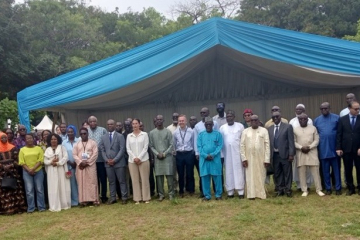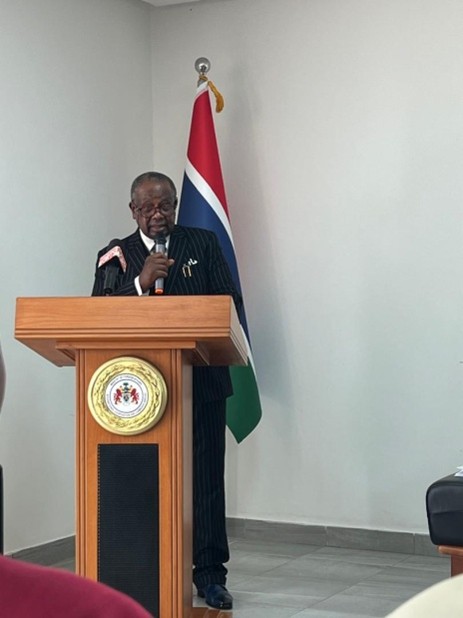
Addressing the gathering, Ambassador Ebrima Ousman Ndure, Chairman of the Interim Committee spearheading the initiative, stressed that retirement should not be viewed as withdrawal from public service.
“Retirement does not mean retreat. Our expertise, networks and wisdom remain vital to our nation,” Ambassador Ndure said.
For the former envoys, the proposed association represents not the conclusion of a career in service, but an opportunity to continue contributing to national development by transferring knowledge, experience and diplomatic skills to a new generation of foreign service officers.
Ndure explained that the initiative emerged following a courtesy call on Foreign Affairs Minister Serign Modou Njie shortly after he assumed office. During the meeting, the minister welcomed the proposal and underscored the importance of engaging former ambassadors in the development of the country's foreign service.
An interim committee comprising a chairperson and ten members was subsequently established. The committee held its inaugural meeting in 2025 and later prepared an aide-mémoire outlining the framework for the proposed association.
According to Ndure, the association is intended to be far more than a social platform for retired diplomats.
He said former diplomats could contribute as mentors, trainers and advisers, helping to strengthen the country's diplomatic capacity through lectures, professional development programmes and training sessions at the proposed Diplomatic Academy.
“We are the living archives of Gambian diplomacy,” he said, arguing that decades of diplomatic experience should be harnessed in the national interest.
Ndure noted that former ambassadors and retired senior diplomatic executives had represented The Gambia at the United Nations and other international organisations, negotiated treaties and navigated complex international relations on behalf of the country.
He argued that the proposed association would ensure that this institutional knowledge is preserved and transferred to future generations of Gambian diplomats.
“This Association is more than a union of seasoned diplomats; it is a bridge between our proud past and our promising future,” he said.
Ndure also paid tribute to former diplomats and senior officials who have passed away, saying their contributions formed an important part of the foundation upon which The Gambia's diplomatic service was built.
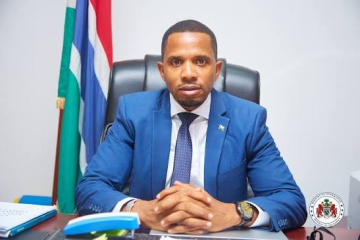
Speaking at the event, Minister of Foreign Affairs, International Cooperation and Gambians Abroad, Serign Modou Njie, welcomed the initiative, describing the gathering as both symbolic and substantive.
According to the minister, the meeting brought together generations of Gambian diplomats and marked the beginning of a renewed partnership between the ministry and those who had served the country with distinction.
“The story of The Gambia's foreign service cannot be written without you,” Njie told the former diplomats, describing them as custodians of the institution's memory, values and traditions.
He disclosed that the ministry intends to establish a structured and sustained relationship with retired diplomats as part of ongoing efforts to modernise and professionalise the foreign service.
Njie revealed that the ministry is currently finalising several strategic policy and regulatory instruments, including a Foreign Policy Framework, Foreign Service Regulations, a Foreign Service Bill, a Foreign Service Strategy, a Posting Policy, a Scheme of Service and a Code of Conduct for Gambian diplomats.
The ministry is also planning to establish a Foreign Service Academy or dedicated training unit to continuously build the capacity of diplomats serving at home and abroad.
According to Njie, the planned reforms are designed to strengthen economic diplomacy, diaspora engagement, public diplomacy and The Gambia's participation in regional and international organisations.
The minister proposed the creation of a formal Retired Diplomats Advisory Forum through which former diplomats could periodically provide advice on foreign policy and diplomatic issues.
He further suggested that retired diplomats could serve as mentors and resource persons for young foreign service officers, particularly through the proposed academy, while their expertise could also be utilised in mediation, negotiation, protocol, bilateral relations and multilateral diplomacy.
Njie additionally proposed the establishment of an Oral History and Archives Programme to document the experiences and contributions of former diplomats and preserve them for future generations.
He emphasised that the ministry's reform agenda is not merely administrative in nature but is intended to institutionalise best practices and equip Gambian diplomats with the tools needed to serve effectively in an increasingly complex global environment.
“These reforms are about empowering Gambian diplomats to serve with renewed confidence, professionalism and competence,” he said.