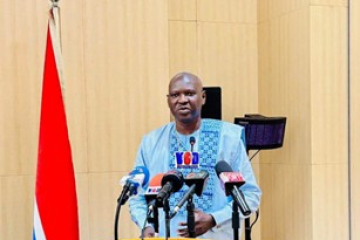
Justice Minister, Dawda Jallow, has warned that The Gambia’s planned hybrid Special Tribunal still requires sustainable funding to deliver justice, as victims of past human rights violations continue to wait for accountability nearly a decade later.
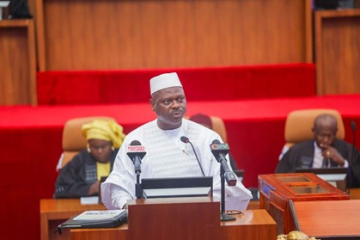
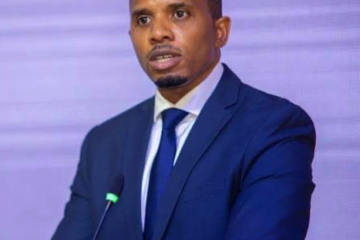
Speaking at a high-level regional seminar of the International Criminal Court (ICC) in Sierra Leone on 22-23 October, Minister Jallow said the country had made progress in establishing institutions to pursue accountability but stressed that the work was far from complete.
The Gambia has passed laws establishing a Special Accountability Mechanism and a Special Prosecutor’s Office, while ECOWAS heads of state and government have approved the establishment of a hybrid Special Tribunal for the country. The tribunal’s first Special Prosecutor was appointed in April 2026.
However, Jallow said these initiatives were only foundations and not a finished building, highlighting the need for sustainable funding to ensure the tribunal can fulfil its mandate.
The two-day seminar, held under the theme “A Partnership in Fighting Impunity for the Gravest Crimes under International Law”, brought together ministers, ambassadors and other representatives from across Africa to discuss strengthening cooperation with the ICC.
In outlining The Gambia’s experience, Jallow said complementarity was not a dividing line between the court and national justice systems, but a shared responsibility requiring states to build their capacity to prosecute serious crimes domestically and cooperate with the ICC where national action fell short.
He reminded participants that the court had no police force, prisons or territory of its own, making states responsible for ensuring that suspects and witnesses could be brought before it.
“Cooperation that is selective, slow or conditional is, in practice, nothing but impunity by another name,” he said, stressing that cooperation with the Court was a legal obligation rather than a courtesy.
Jallow recalled that The Gambia withdrew from the ICC in October 2016 under the previous government before rejoining in February 2017 under the new democratic government. He urged states to remain members of the court through conviction rather than habit.
He also called for structured and honest dialogue between African states and the ICC, saying concerns about the uneven application of international justice deserved answers rather than dismissal.
Justice, he argued, must be applied consistently to the powerful and the weak, regardless of nationality or official position.
In her opening remarks, ICC Second Vice-President Judge Reine Alapini-Gansou of Benin urged Africans to remain committed to their values. She noted that Africa had four of the Court’s 18 judges and 33 member states.
The seminar concluded with renewed commitments by participating states to strengthen cooperation and partnerships in the fight against impunity for the gravest crimes under international law.