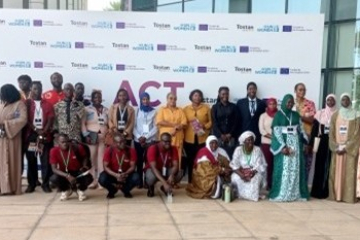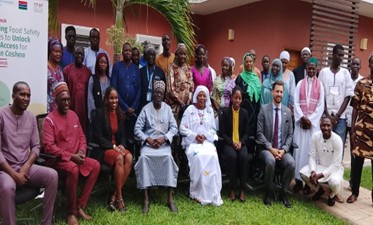
Permanent Secretary at the Ministry of Trade and Regional Integration, Mod Ceesay, made the remarks while speaking at the launch of a project aimed at strengthening food safety practices within the Gambian cashew value chain.
Mr Ceesay said the cashew sector has significant potential to contribute to agricultural development, rural livelihoods, employment and export earnings. However, he stressed that increasing production alone is not enough to make Gambian cashew more competitive.
He said Gambian cashew products must be safe, consistent and compliant with the requirements of the markets the country seeks to access.
The project will support improvements in food legislation, risk-based inspection, laboratory testing and certification, while strengthening the capacity of producers and processors to adopt good food safety practices and systems such as Hazard Analysis and Critical Control Points (HACCP).
According to Mr Ceesay, international buyers are increasingly demanding evidence that food products are produced, processed, handled and certified in accordance with recognised food safety and quality standards. Meeting these requirements, he said, will be critical for The Gambia to access new markets, retain existing markets and attract greater investment into the cashew sector.
He urged stakeholders to change the way they view food safety compliance, saying it should not simply be considered a regulatory requirement or additional burden, but an investment in the competitiveness of Gambian businesses.
“When we improve food safety, processing, traceability and quality, we strengthen the position of Gambian cashew in the marketplace,” he said, stressing the importance of building a reputation where “Made in The Gambia” becomes associated with safe, quality and reliable products.
Mr Ceesay also emphasised that food safety is a shared responsibility and cannot be achieved by the Food Safety and Quality Authority alone. Farmers, processors, traders, exporters, laboratories, government institutions and development partners all have important roles to play in ensuring the success of the initiative.
He called on stakeholders to take ownership of the project and work together to build a food safety system that protects consumers while creating opportunities for Gambian producers and businesses.
The Permanent Secretary further noted that the benefits of the project should extend beyond the cashew sector. The knowledge, systems and capacities developed through the initiative could contribute to strengthening the country’s broader national food control system.
While cashew remains the immediate focus, he said the long-term ambition should be to develop a stronger national food safety system capable of supporting the entire Gambian economy.
Also speaking at the event, Fatou Samba, Vice Chairperson of the Food Safety and Quality Authority Board, called for greater participation of women farmers in the cashew value chain.
Mrs Samba said the project should deliberately create opportunities for more women to become involved in the sector, particularly in production, processing, value addition and marketing.
She stressed that strengthening the cashew industry should not only be about producing more raw cashew but also about ensuring that farmers, processors and producers have the knowledge, skills and resources needed to meet food safety and quality requirements.
According to her, strengthening the capacity of food processors and producers will help local businesses improve the quality of their products, build confidence among buyers and position Gambian cashew for stronger regional and international trade.
Mrs Samba also encouraged the project to support an effective regulatory system backed by standard and appropriate facilities. She said adequate facilities are important for effective inspection, laboratory testing, certification and enforcement of food safety standards.
She argued that a strong regulatory environment would give producers and exporters greater confidence while helping Gambian products meet the requirements of regional and international markets.
Her emphasis on women’s participation also highlights the need to ensure that the economic opportunities created by the cashew sector reach rural communities and women farmers who contribute to agricultural production.
The launch therefore comes at a critical time for The Gambia’s cashew industry, as the country seeks to strengthen agricultural exports and create greater economic opportunities along the value chain.
For farmers and businesses, meeting food safety standards could provide more than compliance. It could open doors to new markets, improve consumer confidence, attract investment and increase the value of Gambian cashew.
The success of the initiative will ultimately depend on how effectively government institutions, farmers, processors, exporters, laboratories and development partners work together. If properly implemented, the project could help transform food safety from a regulatory challenge into a competitive advantage for Gambian cashew and contribute to building a stronger, more trusted agricultural export sector.