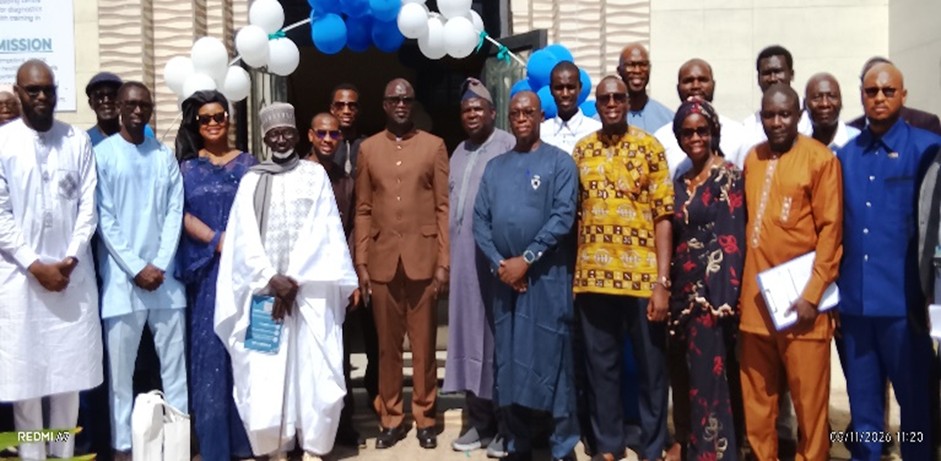
AQA Institute of Diagnostics and Allied Health Sciences (AIDAHs), a private tertiary institution committed to strengthening the health workforce through high-quality training in diagnostics and allied health sciences, has been launched.
Headquartered at Kanifing Estate Junction, the new institution is ready to roll out three-year programmes in its first two programmes, namely Higher National Diploma in Medical Laboratory Sciences and Higher National Diploma in Pharmacy.
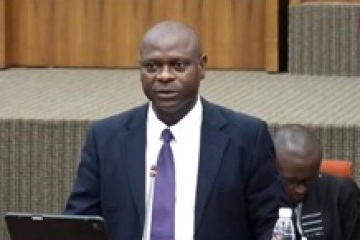
In his opening remarks, Dr Ousman Leigh, Registrar, AIDAHs, expressed assurance that the Registrar's Office will operate with the highest standard of integrity, transparency and efficiency.
"In every admission we process, every transcript we issue and every examination we conduct will reflect the credibility and excellence that AIDAHs Institute stands for. So, to our pioneer students, you are the foundation upon which this great institution will be built," he stated.
He encouraged all to embrace their studies with dedication and steadfastness to enable them to train professionals in diagnostics and allied health sciences of the highest calibre.
He said: "May AQA Institute of Diagnostics and Allied Health Sciences grow from strength to strength and may its graduates have humanity, knowledge, dignity, compassion and distinction. Thank you and may God bless this institute."
Giving an overview of the vision and mission of the programmes, Dr Alasana Darboe, Provost, AIDAHs, assured that in the next three years, their first graduates will graduate. He thanked the institute's governing board for their support and dedication in establishing this school.
"Our vision is to establish an institute of excellence in allied health education in The Gambia. Our mission is to provide quality health teaching and learning through research and innovation," he said.
He emphasised that the institute is committed to building competence and inspiring excellence, as every patient deserves a hand that knows what they are doing.
"As of today, AIDAHs runs two Higher National Diploma programmes - Higher National Diploma in Medical Laboratory Technician and Higher National Diploma in Pharmacy Technician. Our dream is competency and alignment with the West African Health Organisation and the Pharmacy Council curricula," he said.
Guest speaker Dr Jorjoh Ndure-Tambedou, Director of Tertiary and Higher Education Trust (THET) Fund The Gambia, recalled when she first moved back to The Gambia in 2008-2009, she and some of the brains behind the institute were all together at the then Medical Research Council.
She explained that when they first started at the MRC, that was when the MRC started working on standards, building standards and quality assurance and quality management.
"We're building ISO standards, getting accredited. So, I know everything that they do will be embedded in quality and be excellent," she stated.
She challenged them to ensure that as they train their technicians, that they're adaptable, they're research-oriented, but also ethically grounded.
"They also have to be committed to lifelong learning. And as they're working on these samples, let them not forget why they're doing what they're doing. I want to just give an anecdote," she said.
She referenced as a young scientist, working in the lab, how challenging and difficult sometimes the situation could become, further reminding of some ethical values that need to be instilled and built.
With advances in technology, she observed that things change all the time, so all must be willing to change or adapt as they learn.
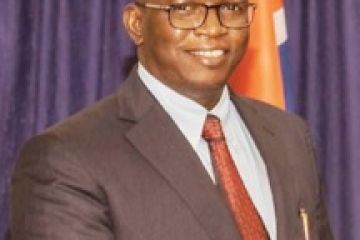
Dr Momodou T. Nyassi, Director of Health Services at the Ministry of Health, commended the school authorities for the move, reminding that no patient can be properly managed without the physiotherapists, the nutritionists, the medical laboratory technicians, the optometrists, the dental technologists, and the many other allied health professionals whose work sustains every point of care in our system.
These professionals, he added, are the backbone of clinical decision-making and the eyes, the ears of medicine, and “yet for years the training of these cadres has not kept pace with the demand it needs, leaving gaps in our health workforce, compromises in quality, and regrettably avoidable harm to patients”.
The establishment of a facility of this nature, he added, is one that brings together training in laboratory sciences, medical imaging, and broader allied health disciplines under one roof, represents exactly the kind of public-private partnership in health education that the national health policy actively encourages.
He encouraged them to maintain quality and accreditation, reminding that the value of any health training institute is measured ultimately by the confidence and safety of its graduates.
He encouraged them to continue working with regulatory bodies and accreditation bodies and councils, committed to ensuring that all health training programmes, public and private alike, meet accepted standards.
Training, he added, must not be undertaken in isolation from the realities of service delivery and thus urged the institution to build stronger links with hospitals, laboratories, and diagnostic centres, both public and private.
Dr Nyassi also reminded that ethical lapses can be devastating, hence they expect that, alongside technical competence, “this institute will instill in its students” a deep sense of professional ethics, patient confidentiality, and compassion.
“A technician who is skillful but dishonest is more dangerous than one who is merely slow,” he avers.
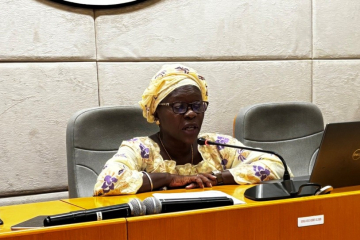
Ramatoulie Secka, a Fellow and representative of the West African Post Graduate College of Medical Laboratory Science, also spoke at the event.