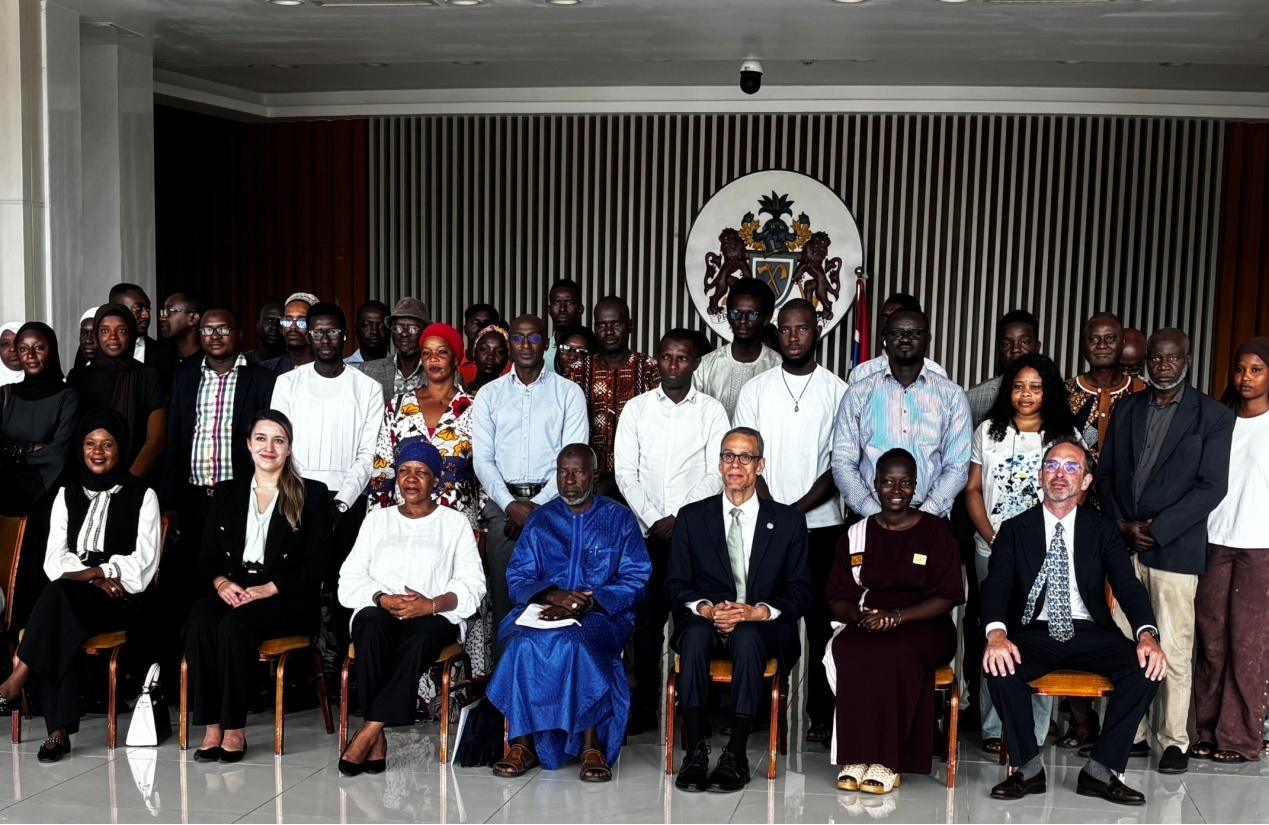
The initiatives seek to build the capacity of young people and women to establish responsible and socially inclusive agribusinesses, improve livelihoods and expand opportunities in value addition, financing and markets.
FAO Representative in The Gambia, Moshibudi Rampedi, said the initiatives build on the organisation’s previous work with young Gambian entrepreneurs through the Agri-Accelerator programme.
She disclosed that more than
70 young people have received investment-readiness coaching, while 24 earlier Agri-Accelerator cohorts benefited from incentive support to strengthen their businesses.
According to her, participants reported improved business knowledge, confidence in presenting their ideas, financial literacy and understanding of markets.
Rampedi said the tropical fruit project would bring new small and medium-sized enterprises into the Agri-Accelerator Hub for coaching and capacity development, with particular attention to responsible business practices, market access and investment readiness.
She noted that tropical fruits present significant opportunities beyond fresh produce, particularly in processing, packaging and marketing, creating opportunities for farmers, women and youth while increasing local value addition.
The Agri-Accelerator 2.0, running from August 2026 to September 2028 with a budget of US$255,000, will strengthen the skills of 200 young women and men in agribusiness financing, responsible investment, marketing and sustainable agribusiness.
It will also support 100 youth-led agribusinesses to apply Responsible Agricultural Investment principles.
FAO Headquarters representative Camila Reinhardt Hurtado said the tropical fruit project, which will run through 2027, is designed to promote sustainable and inclusive food systems by supporting responsible agribusinesses and expanding market opportunities.
She said the project would identify barriers faced by women and youth, provide technical assistance, improve market access and promote dialogue among stakeholders.
The initiative is being implemented in The Gambia, Togo and the Philippines.
United Nations Resident Coordinator in The Gambia Karl Frédérick Paul stressed that young people need meaningful opportunities to build skills, secure decent employment and establish productive livelihoods.
He said women must also have greater opportunities to establish sustainable enterprises and achieve economic independence.
Meanwhile, Permanent Secretary at the Ministry of Agriculture, Livestock and Food Security, Alhagie Nagangdo, stressed that training alone was not enough to transform agriculture.
He cited the huge losses farmers face when produce such as okra floods the market without adequate storage and processing facilities.
The trainings are not enough,” he said, arguing that investment must address critical elements such as storage, processing and market access.
He urged young entrepreneurs participating in the programme to take coaching seriously, apply what they learn and manage their businesses with commitment, discipline and persistence.