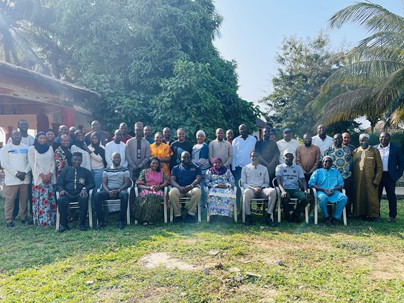
Welcoming participants, the Permanent Secretary, Ebrima Jawara, noted the strong turnout of heads of departments and units as a sign of commitment. He stressed the importance of reflecting on the past year and identifying practical ways to improve performance over the next twelve months. He also acknowledged the support of projects that contributed to the logistical arrangements of the retreat, describing their role as vital in complementing government efforts.
In his opening statement, the Honourable Minister, Rohey John Manjang, framed the retreat as both a privilege and a responsibility. He called on participants to use the sessions to honestly review achievements and shortcomings, and to jointly develop strategies to overcome bottlenecks encountered in the previous year. Planning, he said, is essential to meeting the expectations of the Gambian people.
The Minister underscored the values he believes should guide the work of the Ministry and its partners: honesty, a clear conscience and hard work. He reminded staff that leadership is a trust and that results depend on teamwork between political leadership, technical staff, agencies and projects. He also paid tribute to the Permanent Secretary and the wider team for their dedication, stressing that progress is only possible when people work together and accommodate one another’s differences.
“Protecting and conserving the environment while supporting sustainable economic activities was highlighted as a shared goal that requires broad participation.”
The Minister noted that environmental work has long-term value, with benefits that can be seen and felt by future generations, and urged staff to take pride in the lasting impact of their efforts.
Speaking on the importance of the retreat, the Director of the Central Project Coordination Unit (CPCU), Mariama Ndowe Jarjue, said the sessions allow the Ministry to assess deliverables, measure progress against targets set for 2025, and set new and higher targets for 2026. She added that learning from each other’s successes and challenges helps turn obstacles into opportunities, while collaboration and stakeholder engagement remain key to effective delivery.