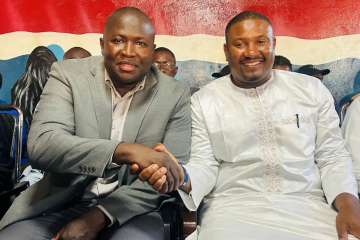
The UNITE leader and flagbearer of coalition 2026 Presidential candidate Talib Ahmed Bensouda has pledged to establish Foni as its own Area Council or administrative area, alongside plans to build a university in the region, as he promised to address what he described as years of neglect under President Adama Barrow.
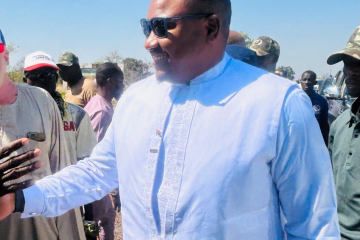
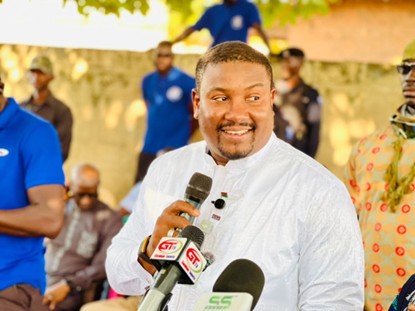
Bensouda made the pledge during his campaign tour of Foni, where he received a strong welcome from supporters following his arrival through Kalagi Bridge in the West Coast Region.
Addressing supporters in Foni Bondali, the Unite Coalition candidate said the region deserved greater administrative recognition and development attention, arguing that residents had endured longstanding challenges despite President Barrow spending 10 years in office.
He said his government would consider establishing Foni as a separate administrative area or Area Council to bring governance closer to communities and improve service delivery.
On education, Bensouda promised to establish a university in Foni, saying young people in the region deserved access to quality tertiary education without having to travel elsewhere to pursue their academic ambitions.
He also pledged to improve healthcare facilities, citing his visit to Bondali Hospital, where he said he was concerned by the limited maternity facilities, including the availability of only one maternity bed in a large ward.
Bensouda argued that development should go beyond road construction, insisting that quality hospitals, schools, employment opportunities and access to clean water were equally important indicators of good governance.
He further criticized the Barrow administration over the country’s persistent irregular migration, saying unemployment, poverty and poor leadership were among the factors pushing young Gambians to undertake dangerous journeys abroad.
Responding to President Barrow’s reported remarks blaming parents for financing irregular migration, Bensouda argued that no parent would willingly risk a child’s life if adequate economic opportunities existed at home.
He called for stronger economic integration programs and improved employment opportunities, particularly for young people.
On workers’ welfare, Bensouda criticized the low earnings of ordinary Gambians, arguing that public sector workers and people engaged in informal trading struggled to support their families.
He pledged to improve salaries and living conditions, saying Gambians deserved to earn better and live with dignity.
On national security, he promised to strengthen the country’s armed forces and reduce reliance on foreign security forces, including ECOMIG, as part of efforts to protect The Gambia’s sovereignty and independence.