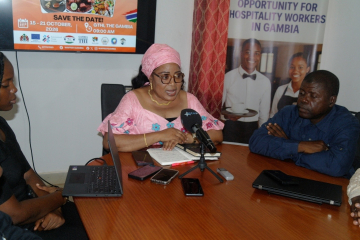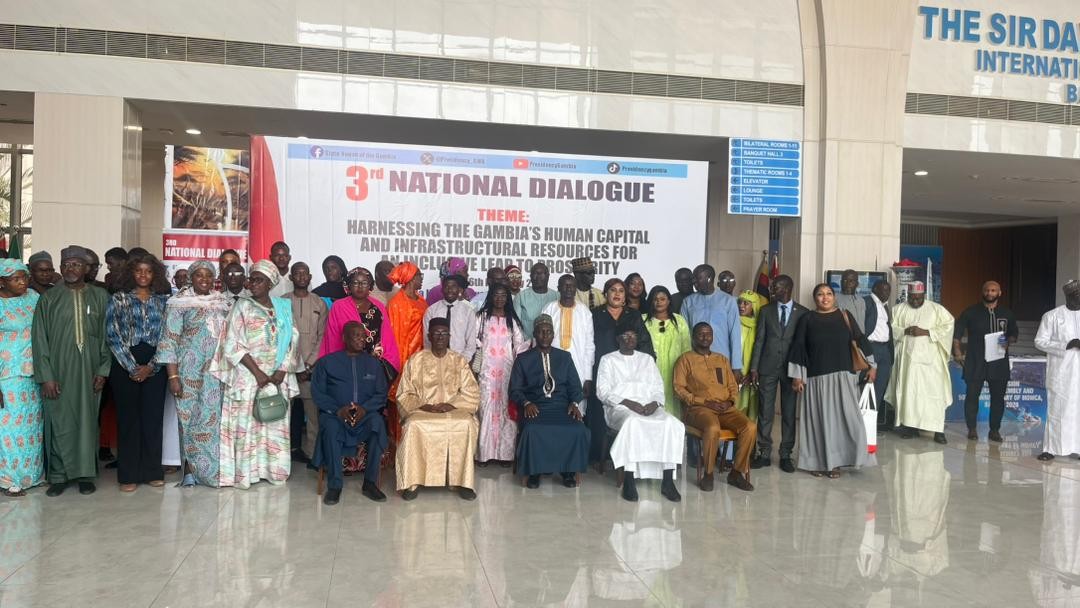
The event, which took place at SDKJICC, institutionalised as part of the Independence Day commemorations, brought together members of the executive, legislature, and judiciary, alongside civil society actors, students, youth representatives, and regional officials.
Representative of the President, Baboucarr Bouy, in his address described the National Dialogue as a strategic platform designed to deepen democratic culture and strengthen citizen engagement. He recalled that since proclaiming February 16 as National Dialogue Day, the initiative has evolved into a structured process beginning with district and regional consultations and culminating in a national forum.
According to Mr Bouy, more than 15,000 citizens have participated in the dialogue process over the past three years, with over 1,200 engaged in 2026 alone. He emphasised that, the dialogue is not just symbolic but essential to ensuring that governance remains responsive and accountable.
“Held under the theme “Harnessing The Gambia’s Human Capital and Infrastructure Resources to Leap into the Future,” this year’s discussions focused on linking infrastructure investment with human capital development to drive sustainable growth,” he said.
Bouy highlighted progress recorded since 2017, including expanded road networks, rural electrification, improved energy generation, and enhanced digital connectivity. These investments, he noted, are reducing trade barriers, stimulating enterprise growth, and creating opportunities for youth and women.
He further reported that recommendations from previous dialogue sessions, particularly those relating to governance reforms, civil liberties, and the rule of law, are being implemented within established institutional frameworks under the National Development Plan (IREWA).
Bouy underscored the president’s commitment in key infrastructural and economic advances over the years. Mentioning that the infrastructural sector’s transformation of roads into modern highways and feeder roads now connect rural communities to markets, while expanded electricity generation and digital connectivity are powering innovation, education, and enterprise.
Investments in human capital, agriculture, and technical and vocational skills are creating opportunities for youth and women, fostering an ecosystem of inclusive growth, he said.
“Where mobility improves, access to education expands. Where energy becomes reliable, industry awakens. When connectivity deepens, entrepreneurship flourishes,” he quoted the President’s statement, illustrating the link between infrastructure development and socioeconomic progress.