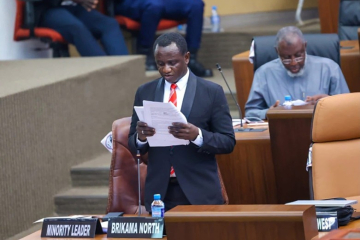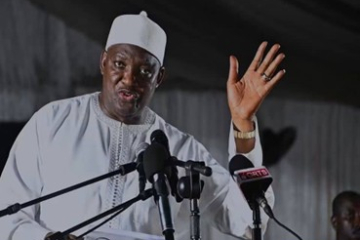
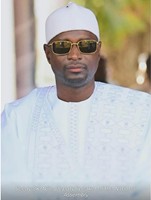
“This moment is not merely ceremonial; it is reflective, interrogative and visionary,” he said, calling on stakeholders to assess how far the country has come and to define together the horizon of its collective future.
The Dialogue, convened under the leadership of President Adama Barrow, was held under the theme “Harnessing The Gambia’s Human Capital and Infrastructural Resources for an Inclusive Leap to Prosperity.” According to the Deputy Speaker, the initiative reflects a governing philosophy rooted in consultation, inclusion and democratic maturity.
He commended the government for nurturing a political culture where national issues are addressed through dialogue rather than division, noting that such an approach consolidates peace, strengthens unity and reinforces participatory governance.
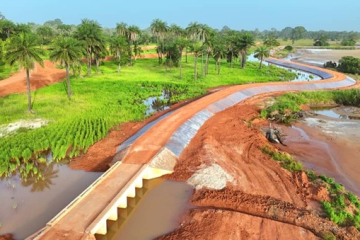
The Deputy Speaker highlighted what he described as a “developmental reawakening of unmistakable scale and consequence” since 2017, pointing to nationwide infrastructure expansion and rural electrification as pillars of national transformation.
Modern highways and feeder roads, he said, are reshaping the economic landscape by connecting farmers to markets, reducing travel time and trade costs, and stimulating tourism. Expanded electricity generation and rural electrification projects are energising enterprises, strengthening agro-processing and enabling digital connectivity across communities that once struggled with darkness.
“These infrastructural gains are, at their core, investments in human capital,” she stressed. “When mobility improves, access to education expands. When energy becomes reliable, industry awakens. When connectivity deepens, entrepreneurship flourishes.”
He added that the ripple effects are already visible through rising income-generating activities, the growth of small and medium enterprises and renewed investor confidence.
Beyond physical infrastructure, the Deputy Speaker underscored the importance of investing in people as the true custodians of national progress. He cited ongoing interventions in education, technical and vocational training, agricultural modernisation, youth empowerment, women’s enterprise development and social protection as key drivers of inclusive growth.
According to him, sustainable development requires dignity, productivity and opportunity to remain at the centre of governance.
The Deputy Speaker also highlighted the National Assembly’s role in translating development commitments into tangible outcomes for citizens. Through the passage of enabling legislation, budget approvals and scrutiny of public expenditure, he said, lawmakers have directed national resources toward priority sectors such as infrastructure, energy, education, health and enterprise development.
Parliamentary committees, he added, have strengthened implementation through field oversight, stakeholder engagement and performance reviews of public programmes - measures that promote transparency and accountability.
“Sustainable development is achieved not only through construction, but through disciplined governance and continuous accountability to the people,” he emphasised.
As The Gambia commemorates 61 years of sovereignty, the Deputy Speaker called on all stakeholders to protect democratic gains, nurture unity and ensure that development remains inclusive in both intention and impact.
He urged the country to harness the full potential of its youthful population, accelerate productive investment and strengthen institutional efficiency, while preserving national cohesion.
“The destiny of The Gambia will not be written by circumstance,” he declared. “It will be written by the collective will, discipline and vision of its people.”
The Third National Dialogue, he concluded, must serve as a turning point renewing patriotism, sharpening national purpose and propelling the country toward prosperity that reaches every community and every generation yet unborn.