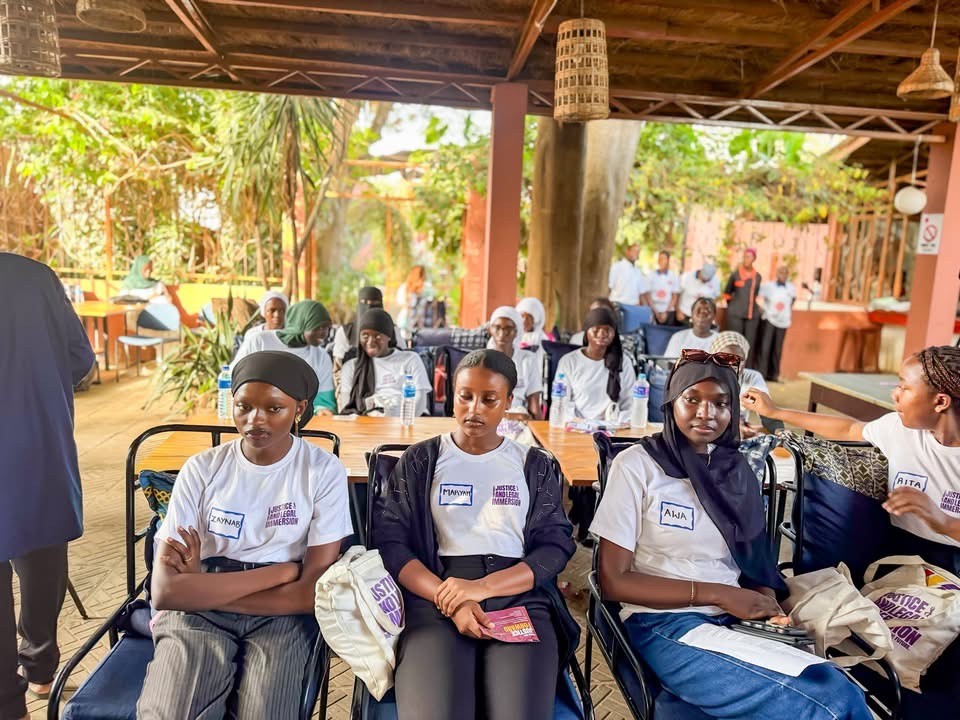
The commitment was announced at the close of the Jali Young Women’s Justice and Legal Immersion Initiative during a Justice Forward Bantaba Chat, where fellows, legal professionals and justice sector stakeholders gathered to discuss access to justice and youth empowerment.
Founder of the initiative, Dr. Satang Nabaneh, said the programme was created to bridge the gap between legal knowledge and community action by giving young women both the skills and confidence to become agents of change.
“We are not just looking at institutions to solve the problem, we are creating a space where young fellows are able to say, we can do this in our communities.”
The fellows, she added, will now return to their communities to carry out projects focused on child marriage, teenage pregnancy and gender inequality, while continuing to receive mentorship from legal professionals and partner institutions.
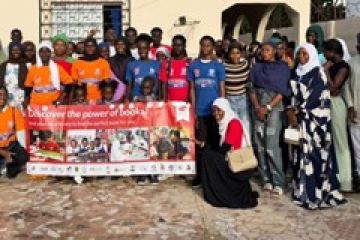
The programme brought together senior secondary school students, University of The Gambia students and law students from The Gambia Law School through an intergenerational learning model that combined mentorship, experiential learning and direct exposure to national justice institutions.
Throughout the week, participants visited the Office of the Chief Justice, the Ministry of Justice, the National Assembly, the National Human Rights Commission, the Institute for Human Rights and Development in Africa (IHRDA), the Gambia Bar Association and the Female Lawyers Association of The Gambia.
They also observed court proceedings and interacted with judges, lawyers and policymakers.
One of the highlights - a senior secondary school student from Soma who had never travelled beyond Brikama before joining the fellowship.
During her first television interview, she spoke about teenage pregnancy in her community, linking it to poverty, child marriage and patriarchal social norms that limit opportunities for girls.
“For many of the fellows, this was their first direct engagement with national institutions and public platforms,” Dr. Nabaneh said, noting that the experience helped participants better understand how structural inequalities affect women and girls.
Grade 11 student Awa Jallow, said the fellowship changed how she viewed justice.
“Before this week, I thought justice only existed in courtrooms, now I understand it exists in our communities, schools and homes. It begins with standing up for what is right.”
She said meeting legal professionals also made lawyers and judges feel more relatable, inspiring her to consider a career in law.
University of The Gambia law student Zainab Drammeh explained that the fellowship reinforced the importance of legal awareness in addressing inequality and expanding access to justice.
“Access to justice begins with knowing your rights and ensuring young people understand they belong in these spaces,” she said.
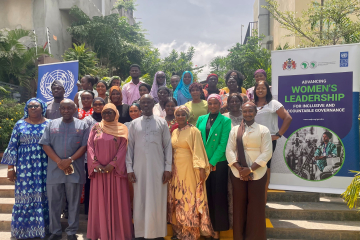
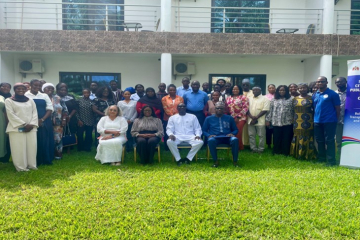
The gathering was attended by prominent women in the legal featuring panel sessions on important legal issues.