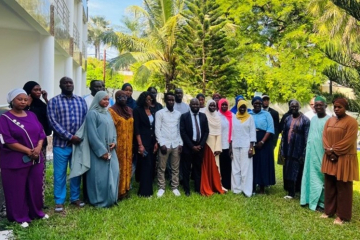
Speaking during a training programme in Beijing, Prof. Xiong Lili, Dean of the Institute of Regional and International Studies at the University of International Business and Economics, outlined how China transformed its rural economy and improved the lives of hundreds of millions of people through carefully planned reforms.
According to Prof. Xiong, China’s economic transformation began in 1978 with the introduction of the household contract responsibility system in rural communities. Under the reform, farming households signed production contracts with the state, paid agricultural taxes, delivered a fixed quota of grain and were allowed to sell surplus produce for profit.
“The government increased the purchasing price of grain and encouraged farmers to expand agricultural production and animal husbandry to improve their livelihoods,” she explained.
The reforms significantly boosted agricultural productivity, increased rural incomes and laid the foundation for broader economic transformation.
Urban reforms followed, with China gradually transitioning towards a socialist market economy. During the 1980s, small and medium-sized state-owned enterprises were opened to private ownership, while the establishment of the Shanghai Stock Exchange marked a major milestone in developing China’s capital market.
China’s accession to the World Trade Organization in 2001 further accelerated economic growth by attracting foreign investment and expanding international trade. Today, cities such as Shenzhen have become global economic powerhouses, home to millions of private enterprises and some of the world’s leading technology companies.
However, Prof. Xiong stressed that economic growth alone could not eliminate poverty. Instead, the Chinese government adopted a targeted poverty alleviation strategy that focused specifically on improving the living conditions of vulnerable rural communities.
“By 2020, the Chinese government proclaimed it had eliminated absolute poverty,” she said, noting that while relative poverty still exists, absolute poverty refers to the lack of basic necessities such as adequate food, safe housing and essential living conditions.
To achieve this ambitious goal, China deployed an unprecedented national campaign. More than 250,000 poverty alleviation work teams and 3 million members and cadres of the Communist Party of China were dispatched to rural villages across the country. Living alongside villagers as “first secretaries,” they worked directly with communities to identify local challenges, implement development projects and create sustainable livelihood opportunities.
Their contributions were formally recognised during a national commendation ceremony held in Beijing on 25 February 2021, where China officially declared victory in its battle against absolute poverty.
Prof. Xiong described the campaign as “a self-revolution of the Communist Party of China,” highlighting how the country’s development has evolved from an underdeveloped agricultural economy in 1978 into the world’s second-largest economy.
She added that China’s next national objective is achieving the “great rejuvenation of the Chinese nation,” with continued investments in rural revitalisation through improved infrastructure, quality education, healthcare services and modern industries.
Sharing China’s experience with participants from developing countries, Prof. Xiong emphasised that the country’s success should not be viewed as a one-size-fits-all model but rather as an example of development shaped by national realities, strong political leadership and effective implementation at the grassroots level.
China’s poverty eradication campaign, she concluded, demonstrates how sustained commitment, inclusive economic policies and community-based development can transform the lives of millions, turning national development goals into tangible improvements for ordinary citizens.