Stakeholders across The Gambia's fisheries sector recently met at a local hotel to galvanise support for the signing of a Memorandum of Understanding (MoU) with the Fisheries Transparency Initiative (FiTI), an international initiative that promotes sustainable marine and fisheries management.
The national convergence was also aimed at promoting transparency in the country's marine resources, while preserving and protecting its territorial waters.
FiTI is an international multi-stakeholder partnership involving governments, industrial fishing companies, small-scale fishing associations, civil society groups and intergovernmental organisations. It promotes sustainable marine fisheries through greater transparency and collaboration.
At the event, stakeholders highlighted the need for government to come on board and explore how the initiative could help strengthen authorities in improving not only accessibility, but also timely and effective management of the fisheries sector.
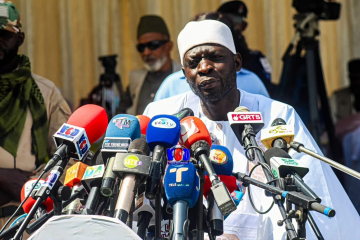
Addressing the gathering, Dawda Foday Saine, Secretary General of the African Confederation of Professional Organizations of Artisanal Fisheries (CAOPA), explained the work of the initiative, noting that FiTI is a global initiative that brings civil society organisations, including small-scale fishers, into one conversation about managing marine resources.
"It works through a multi-stakeholder approach as no single group decides alone," Saine said.
He spoke about the importance of The Gambia joining the initiative, noting that for fisherfolk, transparent information on licences, catches and agreements gives small-scale fishers a fair footing.
He added that for the country's resources, open data helps tackle Illegal, Unreported and Unregulated (IUU) fishing, while protecting stocks for the next generation.
"Thirdly, for trust and investment, a country that opens its books has confidence of citizens, partners," he said.
He referenced Ghana, which has recently been recognised as a FiTI-compliant country.
Saine noted that membership is not a favour but a commitment to people.
"It gives The Gambia a structured, internationally recognised way to improve, step-by-step, with support from FiTI and its partners," he said.
He said membership also carries responsibility, that countries must deliver, and that this is why civil society and small-scale fisheries must be at the table.
"Today, let us speak openly. Listen carefully with practical steps. I invite each of you to take part fully and help make The Gambia a leader in fisheries transparency in West Africa," he added.
Juan Francisco Lechuga, Technical Specialist, Fisheries, Flora and Fauna, outlined the importance of the forum, reminding participants that each institution has an important role to play in ensuring that fisheries resources are managed sustainably and effectively for the benefit of current and future generations.
He said strong governance depends on access to reliable and trusted information.
"Without information, decision-making becomes more difficult. Without transparency, accountability becomes harder to achieve. Without accountability, it is challenging to build trust that is an effective resource," Lechuga said.
He observed that the fisheries sector is no exception, and that across West Africa, fisheries are far more than an economic activity.
"They provide food, employment, income and cultural identity for millions of people," he said.
He maintained that fisheries resources are fundamental to livelihoods, food security and national development, while at the same time, fisheries face increasing pressure from over-exploitation, climate change and growing competition for marine resources.
Responding effectively to these challenges, he said, requires informed decision-making and meaningful participation by all those who depend on fisheries resources.
At the event, participants highlighted the need to promote strong working relations between key stakeholders, from government to CSOs.