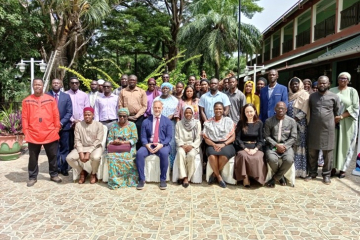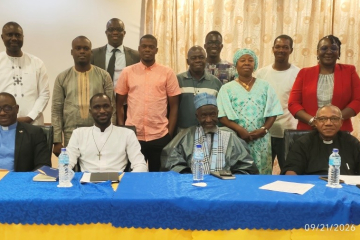
Led by the National Nutrition Agency (NaNA) in partnership with the Department of Community Development (DCD) and the Directorate of Social Welfare (DSW), the initiative forms part of the broader Resilience, Inclusion, Skills and Equity (RISE) Project, jointly funded by the World Bank and the Gambian government.
The Nafa Programme, a key component of RISE, provides regular cash transfers coupled with Social and Behavioural Change Communication (SBCC). This dual approach is designed to help families adopt healthier practices, strengthen financial decision-making, and build long-term resilience. Initially implemented in the country’s 20 poorest districts, the programme is now steadily expanding towards national coverage.
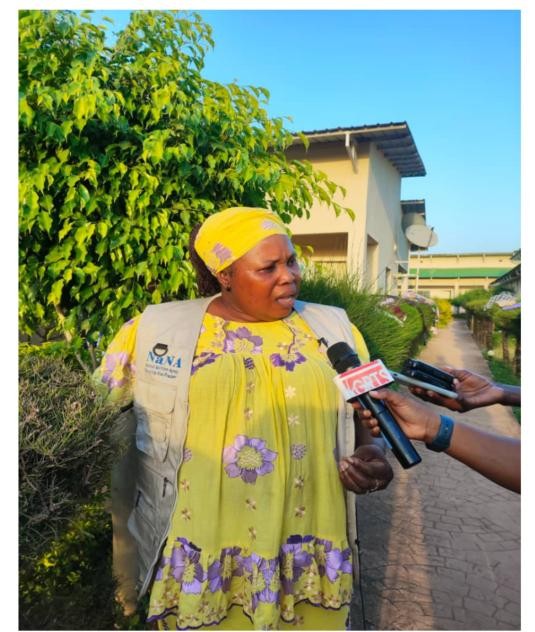
Speaking at the conclusion of the latest enrolment exercise, Catherine Kutu Gibba-Omo, Acting Director of Planning and Resource Mobilisation at NaNA, described the programme’s impact as “truly transformational.”
“I am so excited seeing their lives being transformed,” she said. “Many beneficiaries have moved from where they used to be and have significantly improved their livelihoods. Money is not everything, but what matters is how your life changes. When your capacity is built, you can make the right decisions with or without money.”
Gibba-Omo emphasised that the SBCC component remains central to the programme’s success. Through structured sessions, beneficiaries gain skills and knowledge that help them sustain progress even after cash support ends.
“We want to anchor strongly on SBCC. By building their capacity, we ensure that these families continue to improve their lives long after the programme,” she added.
In Missira village, Jarra West, Lower River Region, Hamadi Jobe, Regional Social Welfare Officer, underscored the role of social services in ensuring the programme runs smoothly. He said his office works closely with communities to facilitate prompt access to entitlements and ensure beneficiaries understand the programme’s objectives.
Jobe noted that issues such as Sexual and Gender-Based Violence (SGBV) form a crucial part of the SBCC modules delivered during cash transfer sessions.
“All GBV cases reported to the police are handled at the Directorate of Social Welfare in collaboration with relevant partners,” he explained. “We also have a major responsibility in child protection, which remains a top development priority.”
As the Nafa expansion progresses, stakeholders stress that the programme is not just delivering financial assistance but equipping households with the knowledge, confidence, and capacity needed to break the cycle of poverty. With thousands more families now enrolled, the initiative is on track to significantly improve livelihoods and strengthen social resilience across The Gambia.