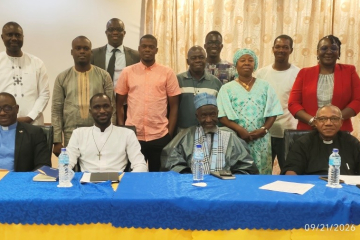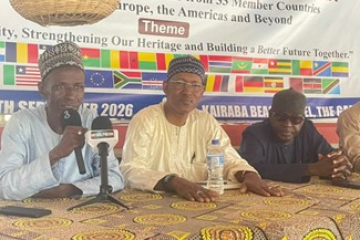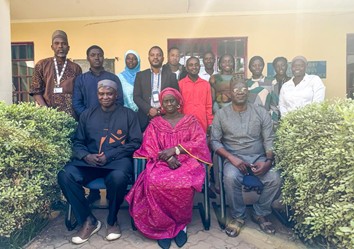
The training, held at the Rotary Centennial Science Laboratory Hall, brought together media practitioners, communication officers, curriculum specialists and education partners. The sessions aim to deepen participants’ understanding of upcoming reforms, particularly the introduction of national languages as mediums of instruction in early grades.
Over the course of the programme, journalists will: Learn about the objectives of the RISE Project; Understand the process of selecting national languages for instruction; Explore the importance of accurate, evidence‑based reporting; Gain guidance on profiling teachers, parents, children and communities involved in the reforms; and discuss how equity and inclusion should be reflected in coverage of foundational learning.
A field visit will also allow participants to observe classroom activities in schools currently piloting national language instruction and to interact directly with teachers, students and parents.
Welcoming participants, MOBSE Communications Officer Mamadou Saidou Jallow described the media as a “vital partner” in the reform process. He noted that the Ministry had recently visited several media houses to ensure journalists remain engaged at every stage.
“Strengthening public awareness is essential because parents and caregivers play a central role in learner success, and the media is the most effective tool for reaching every household,” Jallow said.
Head of Communications Amie Kah emphasised that the Foundational Learning Programme forms part of MOBSE’s wider transformative agenda to improve learning outcomes nationwide.
She explained that research consistently shows children learn faster and more effectively when early literacy and numeracy instruction begins in a familiar language. “For the programme to succeed, communities must fully understand and support it, making the media’s role even more crucial,” she added.
Director of Curriculum Momodu Jeng, who leads the technical development of the reform, highlighted the challenge of learning poverty. He noted that many children struggle to read proficiently at the appropriate age, leaving them to spend the rest of their schooling trying to catch up.
Jeng explained that although the language policy and mapping exercise were completed in 2023, extensive reviews and validations were required before the Ministry could begin public engagement.
National Programme Coordinator Omar Jarjusey reminded participants that MOBSE’s ultimate objective is to ensure every child can read, write and perform numeracy proficiently.
He stressed that public awareness and acceptance are central to achieving this goal, and reiterated that the media’s involvement is essential in ensuring parents, communities and the wider public understand and support the initiative.