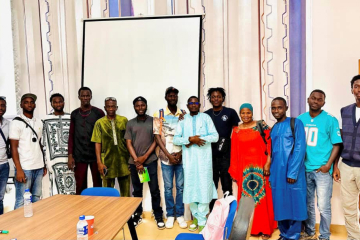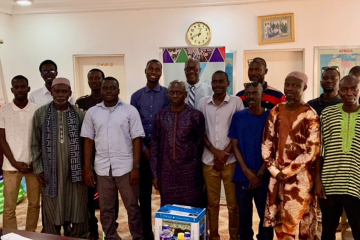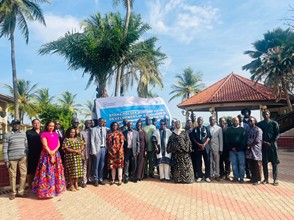
The forum gathered senior government officials, academics, development partners and representatives from Sierra Leone, Senegal, Ethiopia and other regional institutions.
The workshop sought to validate the land governance curriculum needs assessment report, ensuring it accurately reflects national and regional priorities. The assessment highlights skill gaps, institutional challenges, and emerging opportunities that the new programme must address. Once validated, the findings will guide the final curriculum design, leading to key outputs such as an updated assessment report, enhanced institutional ownership within UTG, a clear roadmap for implementation and accreditation, and a draft programme structure for the proposed land administration curriculum.
Delivering remarks on behalf of the UTG Vice-Chancellor, Dr William Jabang, Chief Director of Operations at UTG, underscored the urgency of building national capacity in land administration. He described land issues as one of The Gambia’s most sensitive governance challenges, citing persistent disputes, fragmented systems, and limited professional training as major obstacles to development.
Dr Jabang reaffirmed the university’s commitment to establishing a comprehensive academic pathway in land administration, beginning with a bachelor’s degree and complemented by tailored training for community leaders including alkalos and chiefs. He stressed that effective reform must include both technical experts and traditional custodians who directly manage land at the community level.
ALPC Coordinator, Dr Joan Cuka Kagwanja, applauded UTG and the Government of The Gambia for taking strategic steps to improve land governance. She noted that ALPC continues to support African countries to develop sustainable land policies and modernise curricula that have long relied on Western models, often overlooking customary systems that govern most land across the continent.
Dr Kagwanja reiterated ALPC’s commitment to supporting UTG throughout the curriculum development process. She highlighted the participation of technical experts from Kenya, Senegal, Nigeria and other states who joined the workshop to share comparative experiences and regional best practices.
Speaking on behalf of the Minister of Lands, Deputy Permanent Secretary Mamudou Manjong described the initiative as timely and fully aligned with the National Land Policy. He said the proposed academic programme will directly address long-standing barriers such as poor documentation, limited technical capacity, unplanned settlements and tenure insecurity.
“The development of an academic programme dedicated to land administration is an investment in national stability, social cohesion and economic transformation,” he said, adding that the Ministry remains ready to provide technical expertise and support the curriculum’s roll-out.
The validation workshop forms part of a broader national effort to modernise land governance and strengthen transparency, equity and sustainable land use. Stakeholder consultations and technical sessions will continue throughout the week as UTG, ALPC and government partners work towards finalising the assessment and shaping the future of land governance training in the country.