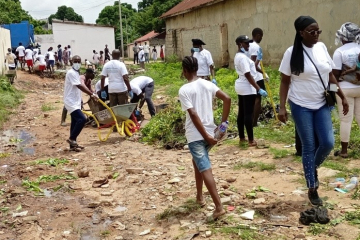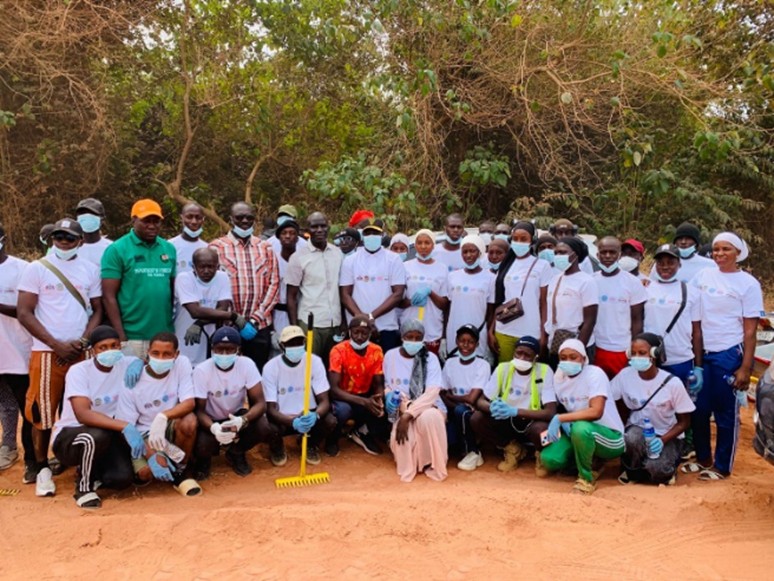
The exercise, led by the ABS project under the Nagoya Protocol, targeted hotspots earmarked for rampant illegal dumping that threatens both forest ecosystems and public water supplies.
The initiative aims not only to remove existing waste but also to promote forest conservation and proper waste management. By highlighting the connection between forest health and water security, officials hope to build local support for protecting these vital ecosystems.
Over recent years, several forests have been progressively transformed into informal dumpsites by surrounding communities. Conservation officials and volunteers joined forces to remove accumulated waste from protected areas. Communities from Jalabang, Nyambai, Kabafita, and Farato Bojang Kunda have been disposing of household and commercial waste in these forests, with some waste collectors travelling from distant areas to dump illegally.
Lieutenant Colonel Salifu Corr, Director of Forestry, expressed alarm at the scale of illegal dumping discovered. “Looking at what is happening in the forest, there is a lot of illegal dumping, and this is definitely not helping,” Corr said during the exercise.
Authorities announced comprehensive plans to prevent future illegal dumping, with a second phase expected early next year. “We want to fence this off,” Corr revealed.
Planned interventions, he said include: Perimeter fencing around the forests, installation of CCTV surveillance systems, enhanced community outreach and education programmes, and stricter enforcement of existing anti-dumping laws
“We are doing everything possible to reach out to the community, especially those around Nyambai and Kabafita Forests,” Corr added. “We are talking to them, explaining that it is very harmful to dump in these forests.”
“The success of the Nagoya Protocol project in Kabafita could serve as a model for addressing similar environmental challenges in other regions of The Gambia, where forests face mounting pressure from human activities and inadequate waste management systems.”
“The illegal dumping crisis in Nyambai and Kabafita reflects broader waste management challenges facing rapidly growing communities in The Gambia. With inadequate formal waste disposal infrastructure, residents and waste collectors have resorted to using forests as convenient dumpsites, creating a cycle of environmental degradation.”
Alpha Kargbo, Technical Coordinator for the Nagoya Protocol ABS project, highlighted the dangers posed by hazardous waste. “Most of this waste is hazardous. If it dissolves into the ground, it can pollute the groundwater,” Kargbo warned.
He emphasised that forests serve as crucial recharge zones where water seeps into the water table, making contamination particularly dangerous. “The easiest way to destroy a nation is through its water sources and food sources,” Kargbo added, underscoring the national security implications of environmental degradation.
The clean-up initiative operates under the ABS (Access and Benefit Sharing) Project, which implements the Nagoya Protocol – an international agreement focused on the fair and equitable sharing of benefits arising from the utilisation of genetic resources. The protocol promotes environmental sustainability, community engagement, and awareness of forest conservation challenges.
Kargbo stressed that the cleansing exercise represents only the first step in a longer-term strategy to restore and protect the forests. “As a project, we felt it was important to start by cleaning up the forest. After this, we intend to put measures in place to ensure this menace does not continue,” he stated.