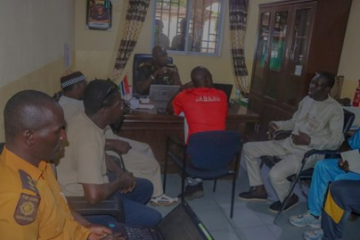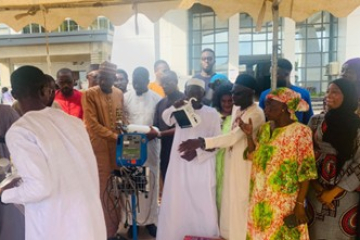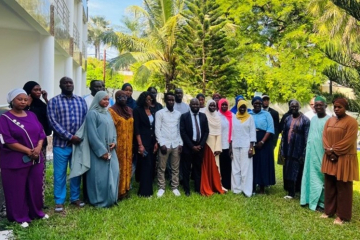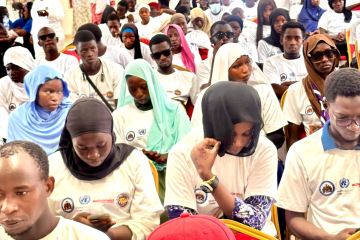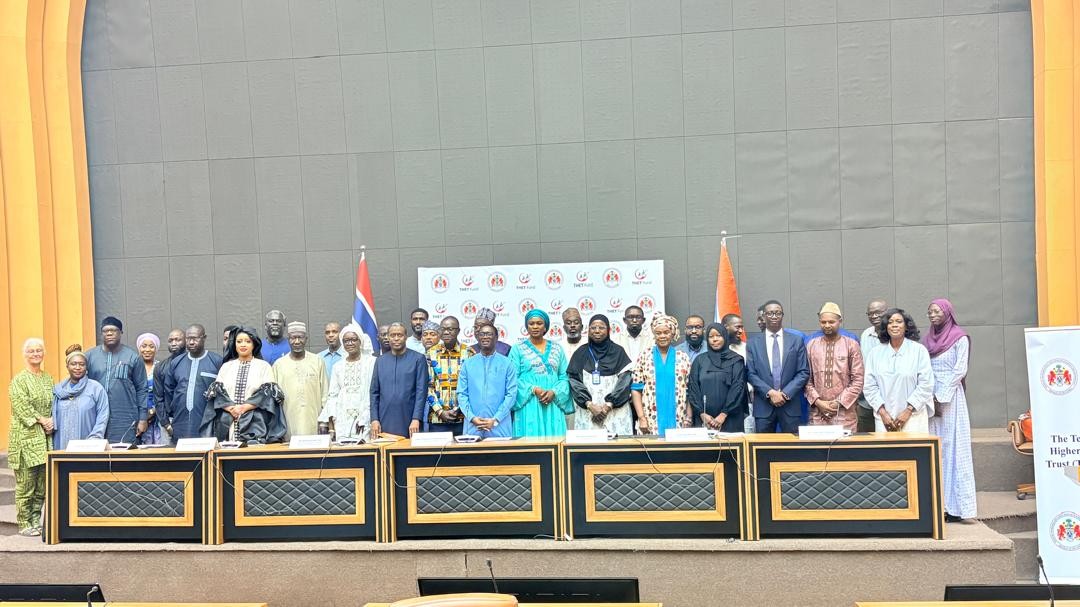
The event, held at the Sir Dawda Kairaba Jawara International Conference Centre, brought together government officials, university vice-chancellors, industry leaders, civil society, students, and development partners.
In her keynote remarks, Isatou Auber, permanent secretary at the Ministry of Higher Education, Research Science and Technology (MoHERST), emphasised the importance of inclusive and responsive education systems.
She highlighted that while thousands of young graduates emerge weekly across the globe, many face barriers transitioning to employment or entrepreneurship.
“The THET Fund reflects our ministry’s commitment to strengthening the link between education, skills development, and national productivity,” she said, urging participants to engage openly in co-creating solutions for workforce readiness.
Chairman of the THET Fund Board, Muhammed Jah, stressed the need for practical, industry-aligned learning environments.
He noted that modern laboratories, workshops, digital classrooms, and research facilities are essential for producing graduates who can contribute immediately to industry.
“If graduates must be retrained in the workplace, we are wasting time and resources.’’
This fund, he added, allows them to invest in infrastructure, inclusive access, and skills development that empower our youth to thrive,” he explained.
Also speaking, Professor Pierre Gomez, Minister for Higher Education Research Science and Technology, highlighted the role of higher education in national transformation.
He called for close collaboration between academia and industry, stressing that the success of graduates determines the nation’s progress.
“Our objective is to produce skilled, adaptable, and industrious citizens who can drive innovation, create jobs, and contribute to sustainable development.’’
Prof Gomez acknowledged that this requires partnership, shared responsibility, and functional education that bridges the gap between learning and employment.
Besides, the forum provides a platform for identifying skills gaps, strengthening institutional capacity, and fostering public-private partnerships to ensure graduates are well-prepared for the workforce.
With this latest initiative, MOHERST reaffirmed its commitment to equipping Gambian graduates with knowledge, skills, and opportunities, emphasising that meaningful change requires collaboration between government, academia, industry, students, civil society, and communities.