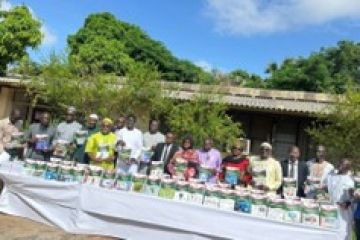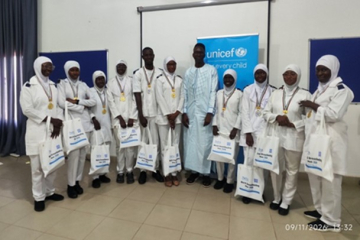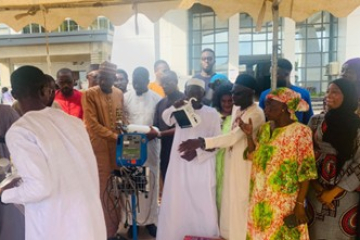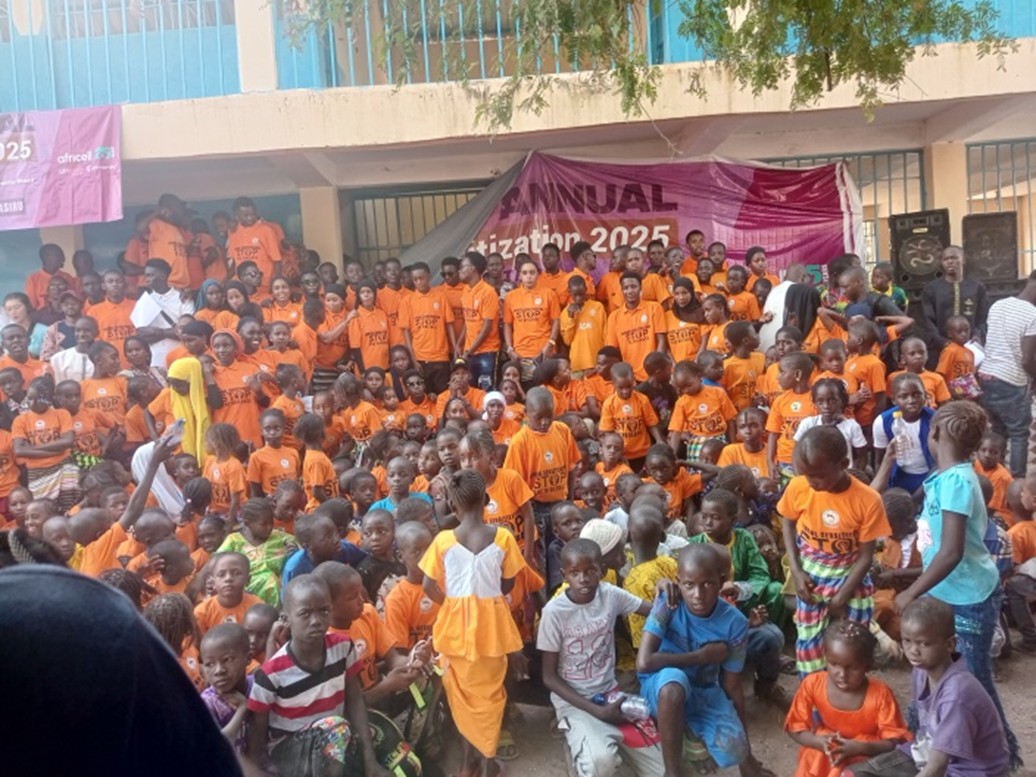
The event drew villagers, regional authorities, and neighbouring communities in a united stand against violence, while promoting education, cultural values, and social harmony.
The Sare Gubu Student Association (SGSA), organisers of the forum, were hailed for their continued commitment to the village’s development.
Over the past twelve years, the association has spearheaded initiatives that have transformed the community, tackling issues from education to social justice, with each annual theme addressing pressing challenges.
Organisers emphasised that the forum aimed to raise awareness of the consequences of gender-based violence and to inspire collective responsibility in fostering a society free from abuse.
Speaking at the event, Tijan Bah, president of the association, expressed heartfelt gratitude to the villagers and natives of Sare Gubu Basiru in the Diaspora for their continued support. He noted that the association, established several years ago with the objective of promoting education in the village, has already yielded remarkable progress.
Currently, 11 students from Sare Gubu are pursuing degree programmes at the University of The Gambia, while others are enrolled at The Gambia College. Several have gone on to achieve Master’s and even PhD qualifications, a testament, he said, to the association’s enduring commitment to advancing the village’s development.
Reflecting on the milestone, Bah acknowledged the challenges of sustaining such an initiative over 12 years. “Reaching this point has not been an easy ride. We are here today because everyone, from the executive to the farmers has played their part and done what they were supposed to do,” he remarked.
Bah emphasised that this year’s theme, “Building a Community Free from Gender‑Based Violence,” was chosen to address one of the most pressing social issues facing the country. With reports of gender‑based violence frequently occurring nationwide, he stressed the importance of sensitising villagers to ensure Sare Gubu remains free from such negative practices.
Guest speaker Ebrima Kinteh, Regional Administrator for the National Human Rights Commission in both the Upper and Central River Regions, underscored the significance of the convergence and the chosen theme. He stressed that GBV affects everyone, men and women alike, and requires collective action. Kinteh commended SGSA for organising such an important event, describing GBV as endemic and deeply rooted in society. He explained that GBV encompasses sexual abuse, economic violence, and other forms of harm, all of which constitute human rights violations.
Kinteh warned of the consequences of GBV, which can lead to loss of livelihoods and dignity, particularly for women, children, people with disabilities, and minority groups. He noted the disturbing reality that GBV often occurs within homes, which should be safe spaces. He called for an inclusive, non-discriminatory approach to eradicating GBV, stressing that perpetrators must be held accountable while victims must be supported. He urged the community to reject the culture of silence, often referred to as ‘maslaha’ syndrome, and to take decisive action.
“Ending GBV is a duty for all of us,” Kinteh declared. “It is a smart investment in the growth of our society. When our women are safe and empowered, everyone benefits. Together, we can build communities free from violence and discrimination.”
For his part, Yerro B. Bah reminded participants that the 1997 Constitution and other national laws explicitly prohibit gender-based violence (GBV). He urged the community to distance itself from such practices, stressing that women have the right to work and to marry at an appropriate age. Bah cautioned against forcing children into marriage, noting that violations of these laws could result in imprisonment or heavy fines. He highlighted the Children’s (Amendment) Act 2016, which prohibits child marriage, and condemned wife battering and the denial of women’s fundamental human rights. He further emphasised that numerous international laws and instruments also outlaw GBV.
Basiru L. Bah, the first president of SGSA and Acting Director of Legal and Investigation at the National Human Rights Commission, outlined the association’s five-year strategic plan aimed at promoting the development and wellbeing of the village. As part of this plan, SGSA will convene annually with the Parents Teachers Association to assess the progress of the school and its students, with the goal of improving teaching and learning. He reaffirmed the association’s commitment to achieving these objectives.
The event also featured a drama in three segments: one highlighting child and forced marriage, another portraying men making decisions without consulting women, and a third depicting marital difficulties and discrimination against people with disabilities. These performances illustrated how GBV manifests in everyday life and its damaging effects on communities.