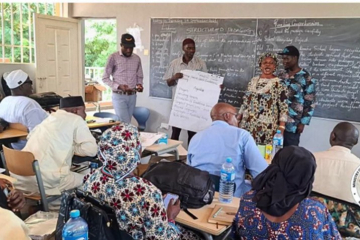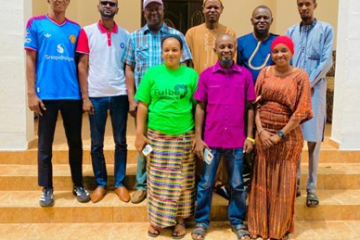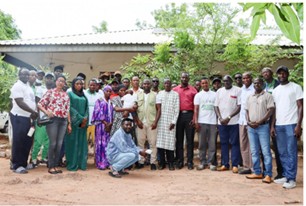
The training is part of ongoing efforts to strengthen climate information services at community level, ensuring that weather and seasonal forecasts are translated into simple, practical messages that farmers can easily understand and apply.
It also focuses on enhancing the dissemination of the 2026 Seasonal Rainfall Forecast, enabling farming communities to make informed decisions on planting periods, water management, and crop protection in the face of increasing climate variability.
Speaking on behalf of the RICAR National Project Coordinator, Bakary Trawally said the initiative reflects a strong commitment to ensuring that climate information is not only generated but effectively communicated and used for action on the ground.
He described the refresher training as a demonstration of dedication and impact, noting that community-based change agents continue to play a key role in bridging the gap between technical climate data and rural farming realities.
According to him, farmers are increasingly relying on seasonal forecasts to guide agricultural decisions, including when to plant, how to manage scarce water resources, and how to reduce risks associated with erratic rainfall patterns. He said these practices contribute to improved food security and stronger resilience among vulnerable rural households.
Delivering remarks on behalf of the Governor of the Upper River Region, Pateh Baldeh urged participants to take the training seriously and ensure that the knowledge gained is effectively cascaded to farming communities.
He stressed that climate change remains a shared national challenge requiring stronger collaboration among institutions, while commending the efforts of agricultural and water resources departments in promoting climate-smart agriculture.
Representing the Department of Water Resources, Dr. Peter Gibba highlighted the importance of the annual forecasting initiative, disclosing that the 2026 Seasonal Rainfall Forecast has already been released.
He explained that the training will equip participants with improved skills to interpret and communicate the forecast in ways that are practical and accessible to farmers. He added that the programme has significantly improved public trust in weather information and encouraged wider use of climate data in agricultural planning.
The RICAR project, implemented through government and development partners, continues to strengthen resilience in farming communities by improving access to timely and reliable climate information, a key factor in safeguarding livelihoods in the face of increasing climate shocks.
Participants are expected to return to their communities after the training to support farmers with updated climate guidance as the 2026 rainy season progresses.