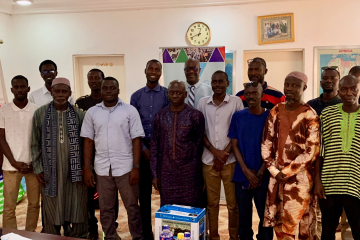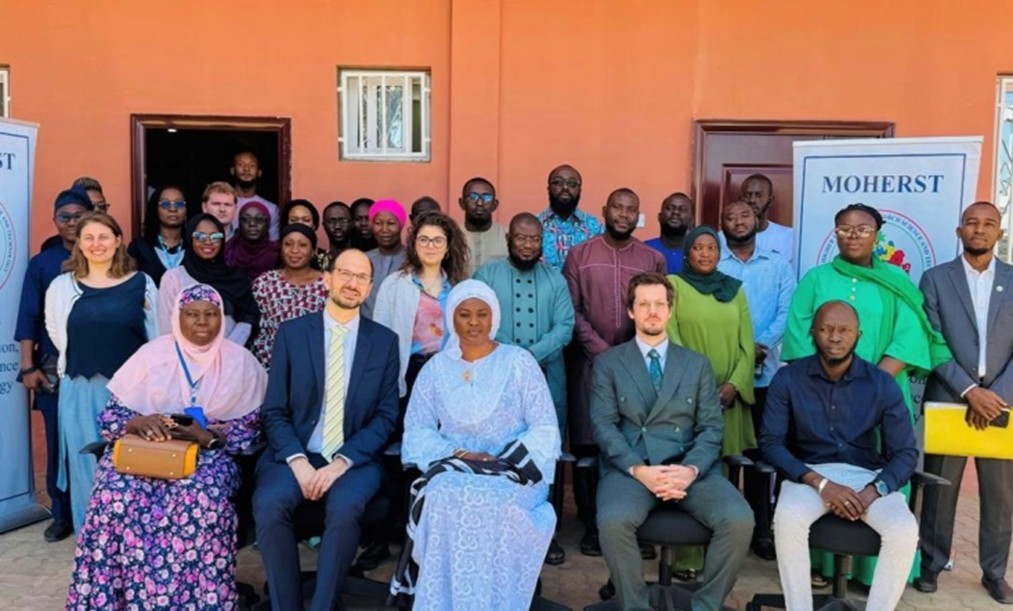
She made the remarks on Wednesday, 11 February 2026, during a stakeholders’ forum held at the Ministry’s conference hall. The gathering brought together experts, policymakers, and development partners to discuss strategies for harnessing STI to strengthen national food security and promote sustainable development.
Speaking on behalf of Minister Pierre Gomez, Ms Auber said the forum reflects a collective commitment to evidence-based policies and innovative solutions to address one of the most pressing challenges facing both The Gambia and the wider African continent.
“This activity, implemented under the Africa Regional Centres of Excellence programme, highlights the critical role that regional and national institutions play in strengthening innovation ecosystems and advancing the green transition,” she noted. “By bridging scientific expertise, policy needs, and local development priorities, we are laying the foundation for sustainable socio-economic transformation.”
Ms Auber stressed that the Gambian government recognises science, technology, and innovation as powerful drivers of national development. She explained that the STI for SDGs roadmap, co-developed with the European Commission’s Joint Research Centre and local partners, provides a strategic framework for identifying investment opportunities tailored to the country’s sustainability challenges—particularly in enhancing food security.
Through the application of Social Multi-Criteria Analysis methodology, she said, investments can be prioritised in a transparent and inclusive manner, drawing on expert knowledge as well as the perspectives of diverse stakeholders. “This participatory approach ensures that our policy decisions are not only evidence-informed but also context-sensitive and aligned with national development aspirations,” she added.
The forum, she revealed, will help shape a ranking of priority STI investments to guide fundraising strategies and policy interventions aimed at strengthening food self-sufficiency. This process, she said, will enhance national capacity for evidence-informed policymaking, positioning institutions to respond more effectively to future challenges.
Ms Auber applauded the European Commission’s Joint Research Centre and other partners for their continued collaboration and technical support, noting that such partnerships reinforce a shared vision of building resilient systems that promote innovation, sustainability, and inclusive growth.
“As we deliberate today, I encourage open dialogue, constructive engagement, and forward-looking thinking,” she said. “The decisions we inform here have the potential to transform our agricultural systems, empower our researchers and innovators, and improve livelihoods across the country.”
Representing the European Union, Mr Buba Tamba reaffirmed the EU’s commitment to supporting The Gambia in this endeavour. He stressed that sustainable development, particularly food self-sufficiency, is not merely an aspiration but a necessity for the nation’s prosperity and resilience.
He acknowledged the challenges The Gambia’s food systems face, including rising food insecurity, climate-induced shocks, and economic vulnerabilities exacerbated by global crises. However, he highlighted the country’s rich agricultural heritage and growing STI ecosystem as key assets that position The Gambia to lead in transformative, homegrown solutions.
“With bold and innovative approaches, The Gambia can ensure that no citizen goes to bed hungry,” Mr Tamba concluded.