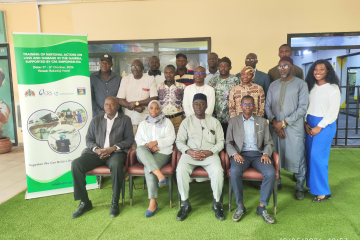
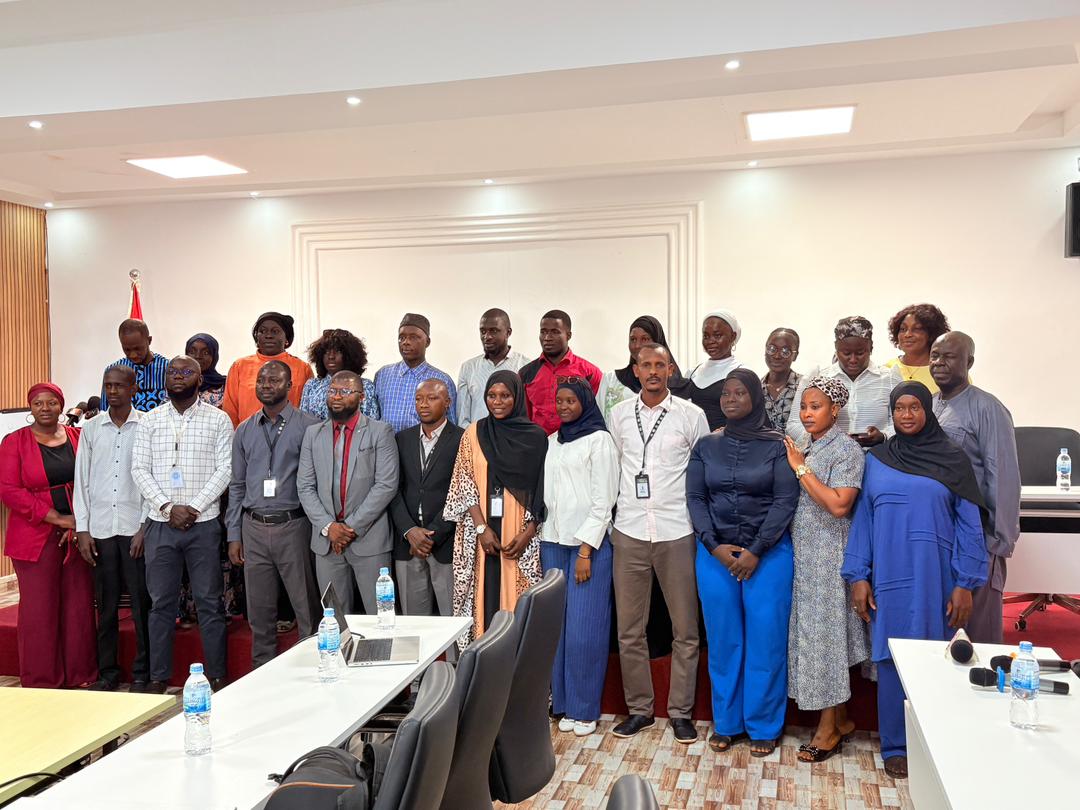
The call came from the National Social Protection Agency (NSPA) during a training session held at Metzy Hotel in Senegambia on 20 April 2026.
The event brought together reporters, radio presenters, and communications officers from organisations including SOS Children’s Villages, Catholic Relief Services, the Ministry of Gender, and the Office of the Vice President.
Opening the session, NSPA Executive Director Saikou Jeng declared that The Gambia is entering “a new time” for social protection. He pointed to the Social Protection Act of 2024, accompanying regulations, and a new national plan running from 2026 to 2035. These frameworks mandate government support for vulnerable and impoverished citizens.
But Jeng stressed that legislation alone is not enough. “Most people in the village do not read the law,” he said. “They listen to the radio, they watch TV, they read the paper. That means you, the media, are the bridge.”
He explained that NSPA provides monthly cash transfers to poor households and responds to shocks such as droughts or floods. The agency is also building a comprehensive social registry to identify those most in need. Yet mistrust remains. “Many people believe only those with connections benefit. Others feel ashamed to accept support. Good reporting can change that. Bad reporting makes it worse,” he warned.
Jeng urged journalists to follow three guiding principles: Accuracy and clarity, thereby simplify technical language for the public, respect for dignity – avoid exposing identities if it risks harm, and constructive reporting – use stories to demand accountability and highlight solutions.
NSPA Communications Officer Samuel Williams echoed these concerns, noting that many stories about poverty are poorly handled. “Some reports shame people. Others reveal private details that should remain confidential. We must stop that,” he said.
Williams described social protection as a “soft topic” because it deals with people already facing hardship—widows, the unemployed, children, and families affected by floods or rising food prices. “If a reporter uses the wrong words or images, it can hurt them even more,” he cautioned.
He reminded participants that journalists have two responsibilities: to inform the public and to amplify the voices of the vulnerable. “Do not just say there was a flood and people got money,” he urged. “Ask why the flood happened. Ask if the money was enough. Ask what the government will do next.”
The National Social Protection Agency, established under the Office of the Vice President and formalised by the NSPA Act 2024, leads the coordination and implementation of national social protection policies. Its mission is to reduce poverty and vulnerability through programmes such as the NAFA Cash Transfer, while managing the Gambia Social Registry to ensure support reaches those who need it most.