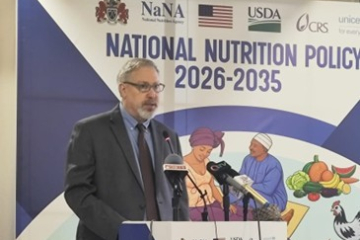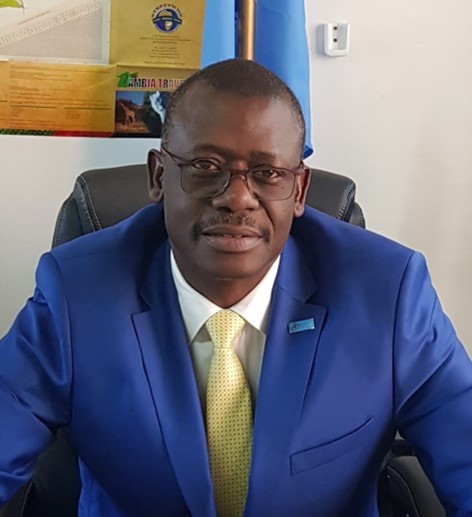
Dr Nathan Nsubuga Bakyaita made these remarks on Tuesday during activities marking World Malaria Day, celebrated globally each year on 25 April. The theme for this year’s event is “Driven to End Malaria; Now we can. Now we must.” The day is dedicated to raising awareness, renewing commitment, and mobilising action against one of the world’s oldest and deadliest diseases. Beyond awareness, it represents a global movement where science, policy, and community action converge around the shared goal of ending malaria.
“It also draws attention to a persistent paradox: a disease, both preventable and treatable continues to endanger millions, particularly in Africa. Yet it also reinforces a powerful message of possibility—that malaria elimination is not aspirational, but achievable with sustained commitment and collective resolve,” he stated.
Dr Bakyaita reminded communities that it is with this understanding that they gather with a shared purpose to accelerate efforts, save lives, and move closer to a malaria-free world. “New malaria vaccines are now being introduced in countries, newer insecticide-treated nets are replacing older ones in large numbers, and additional tools such as long-acting preventive medicine and other innovations are starting to strengthen the response,” he said.
He noted that many countries are scaling up these interventions so that more children and families are protected each year. “For the first time, ending malaria in our lifetime is no longer just an idea—it is becoming a real and achievable possibility.”
Dr Bakyaita also highlighted progress in The Gambia, where global momentum is translating into measurable impact. Confirmed malaria cases declined from over 108,000 in 2024 to approximately 58,000 in 2025—a reduction of nearly 46%. In the same period, 1.2 million next-generation insecticide-treated nets were distributed, reaching more than 80% of households. In addition, over 127,000 children under five were protected through seasonal malaria chemoprevention, and malaria testing is now available in almost all public health facilities.
He further referenced the WHO Global Technical Strategy for Malaria 2016–2030, which provides a clear path towards elimination. “We are supported by strong partnerships such as the Roll Back Malaria (RBM) Partnership and Zero Malaria Starts with Me, a movement which reminds us that ending malaria is a shared responsibility for governments, partners, and communities alike.”
Dr Bakyaita stressed that this year’s theme captures both opportunity and responsibility, as people now have proven tools, robust knowledge, and solid partnerships to end malaria. However, he warned that these gains will not hold without continued action, emphasising the need to invest in malaria control, ensure universal access to prevention, diagnosis and treatment, and strengthen surveillance so that cases are quickly detected and addressed.